
Salt Lake County, Northern Utah
Moving to Draper, Utah
Draper sits at the south end of the Salt Lake Valley, where I-15 crosses the Point of the Mountain into Utah County. City Hall is at about 4,500 feet, and the SunCrest ridge climbs past 6,000. Downtown Salt Lake City is about 25 minutes north and Lehi about 15 minutes south. Want to see what is for sale right now? The Browse Draper homes button below shows every listing.
Drive times from Draper. Look up any Utah drive
Start here
What brings you to Draper?

Pick one, and I will point you to the right page. It takes three taps at most, and there is nothing to sign up for.
Chapter 1 of 4
The place and the weather
What Draper is, how high it climbs, and what the sky does all year.
City at a glance
What are the quick facts on Draper?
The place
The weather
The money
Around town
Sources: U.S. Census Bureau, NOAA, USGS, and the Utah State Tax Commission. Prices move, so ask me for current numbers.
Overview
What is Draper like?
Short answerA city of about 50,650 at the Point of the Mountain, in two counties, climbing from the river to the SunCrest ridge, with a big state rebuild of the old prison land under way.
Draper sits at the south end of the Salt Lake Valley, where I-15 crosses the Point of the Mountain into Utah County. About 50,650 people live here, by the 2025 Census estimate. That is almost the same as in 2020, because the flat land is full.
The city climbs a lot. City Hall is at about 4,500 feet. The Jordan River on the west edge is near 4,350. The SunCrest ridge on the east passes 6,000. That is a rise of about 1,900 feet inside one city. Most of Draper is in Salt Lake County, but about 3,500 people live in the Utah County part. The two counties topic explains why that matters when you buy.
Ebenezer Brown brought his cattle to graze along South Willow Creek in the fall of 1849, and his family moved here the next spring. His wife’s brother, William Draper Jr., joined them in 1850. The settlement was first called Brownsville, and then it was named Draperville for him. Draper became a city in 1978. For years, many Utahns knew it best as the place with the state prison.
The Point
The prison left in July 2022. Its land is now being rebuilt as The Point, a state-led project of about 600 acres. Homes on Draper’s west and south sides sit closest to the site, so they will feel the work and the new traffic first. Here is where it stands.
- July 2022The state prison closes at the Point of the Mountain.
- December 17, 2024Work begins on roads and utilities, starting with Porter Rockwell Boulevard through the site.
- June 29, 2026Construction begins on the first buildings, on about 104 acres.
- 2028The first buildings and public spaces are expected to start opening.
The first buildings are a 5,000-seat arena, an apartment building called Chroma with 363 homes over shops, and a main street called The Promenade. The whole plan calls for about 3,000 apartments and more than 2 million square feet of offices. It also has 222,000 square feet of shops, restaurants and a grocery. It adds River to Range, a paved trail of 1.4 miles. The trail will link the Jordan River Parkway to the Corner Canyon foothills. A University of Utah medical campus is planned for a later phase, and nothing has been built for it. The land authority says the whole site will take at least 15 years.
Highlights
- About 50,650 people, by the 2025 Census estimate, with almost no change since 2020.
- City Hall at about 4,500 feet. The city rises about 1,900 feet from the river to the SunCrest ridge.
- Settled in 1849, named for William Draper Jr., and a city since 1978.
- Part of Draper is in Utah County. About 3,500 people live in that part.
- The Point began construction on June 29, 2026. The first buildings are expected to open from 2028.
- Downtown Salt Lake City is about 25 minutes north, and Lehi about 15 minutes south.
Plans change on big projects. If the timing matters to your move, check the land authority’s plan before you decide. Want the street level view of Draper? Draper on The Local has guides to the city. Weighing the whole state? Start with my relocating to Utah guide. I did the homework on Draper. In Draper, a partner agent I trust does the work on the ground.
Sources: the U.S. Census, USGS elevations, the city’s history page, Utah History to Go, KSL, and The Point’s own pages.
Still choosing a town?Utah City FinderSort 138 Utah towns by budget, snow, summer heat, and the drive to work.Find a townClimate and weather
What is the weather like in Draper?
Short answerHot, dry summers, cold winters with steady snow, and mild spring and fall. July highs are near 94°F and January lows near 24°F.
Draper has four true seasons. Summers are hot and dry. Winters are cold, with steady snow from November through March. Spring and fall are mild. Draper has no weather station running today, so these numbers come from NOAA’s 1991 to 2020 normals at Salt Lake City International Airport. That station is about 18 miles north on the same flat low ground.
An old NOAA station at the Point of the Mountain reported until 2008. Its normals land within about a degree of the airport’s. That is good support for using the airport numbers here.
Spring
Highs 55 to 73°F
Cool and changeable, with snow still possible in March. The last freeze usually comes in mid April.
Summer
Highs 84 to 94°F
Hot, dry days and warm nights in the 60s. Summer ozone brings some of the year's poor air days.
Fall
Highs 51 to 81°F
Clear and mild. The first freeze usually comes in late October.
Winter
Highs 39 to 45°F
Real winter, with December and January the snowiest months and nights in the mid 20s.
Month by month
These are the normal highs and lows for each month. The summer nights cool off. A normal July night drops to about 68°F.
- JanuaryHigh 39°F, low 24°F
- FebruaryHigh 45°F, low 29°F
- MarchHigh 55°F, low 36°F
- AprilHigh 62°F, low 42°F
- MayHigh 73°F, low 50°F
- JuneHigh 84°F, low 59°F
- JulyHigh 94°F, low 68°F
- AugustHigh 92°F, low 67°F
- SeptemberHigh 81°F, low 56°F
- OctoberHigh 66°F, low 44°F
- NovemberHigh 51°F, low 33°F
- DecemberHigh 39°F, low 25°F
Source: NOAA climate normals, 1991 to 2020, Salt Lake City International Airport station. Months are rounded to the nearest degree.
Rain and melted snow add up to about 15.5 inches a year. April is the wettest month, with about 2.2 inches. July is the driest, with about 0.5.
Frost dates matter if you garden. At the airport, the last spring freeze is usually around April 8, and the first fall freeze around October 31. That leaves about 204 frost-free days. The old Point station ran a little colder at both ends. Its last freeze was about April 18, and its first about October 22, for about 185 days. The ground at the Point is about a week behind the airport in spring, and ahead of it in fall.
Height matters even more. Alpine sits at 5,100 feet, about 6 miles southeast of City Hall, below SunCrest. Its station logs a last freeze around May 3 and a first freeze around October 12. July highs there are near 90°F, and July nights fall to about 58°F. SunCrest is higher still and has no station of its own.
Highlights
- A normal January day: high 39°F, low 24°F.
- A normal July day: high 94°F, low 68°F.
- About 15.5 inches of rain and melted snow a year. April is the wettest month and July the driest.
- Last spring freeze about April 8 at the airport and April 18 at the Point. First fall freeze about October 31 and October 22.
- About 45 days a year have an inch or more of snow on the ground at the airport.
- Alpine, at 5,100 feet, has a last freeze near May 3.
Good to know. The airport station sits about 280 feet lower than City Hall, and far lower than SunCrest. Ask which part of Draper a home is in, because a home high on the ridge has a different spring and winter.
For the day to day side, see Draper on The Local.
Snow
How much snow does Draper get?
Short answerAbout 52 inches in a normal year on the flat low ground, mostly November through March. The upper ground gets much more.
Draper gets about 52 inches of snow in a normal year on the flat low ground. That is close to Bountiful, and less than Logan or Heber City. Most of it falls from November through March.
Source: NOAA climate normals, 1991 to 2020, the weather station in each town. Draper uses the Salt Lake City airport station, the nearest with full normals.
January is the snowiest month, with about 12.7 inches. December brings about 12.1 and February about 10.7. November adds about 7, March about 6, and April about 3. October and May get only a trace. No snow falls from June through September.
Snow cover is short in the valley. At the airport, the ground holds an inch of snow or more on about 45 days a year. A day with 10 inches or more on the ground is rare, about 1.6 days a year.
The upper ground gets much more. The Alpine station, at 5,100 feet, logs about 74 inches a year. That number is provisional, but it is the best one near the ridge. SunCrest is higher still, so expect more again. No station reports there, so no one can give you a SunCrest total. The ridge has a special service district that handles snow removal. The SunCrest topic covers it.
Highlights
- About 52 inches a year on the flat low ground.
- About 74 inches a year at Alpine, 5,100 feet, closer to the ridge.
- January, December and February are the snowiest months.
- No snow falls from June through September.
- The valley ground holds an inch or more on about 45 days a year.
Good to know. The airport number is not your snow number. A home high on the east side or at SunCrest gets more snow, a longer shoveling season and steeper roads in ice. Ask what the street is like after a storm.
For the bigger picture on snow and water in Utah, read my guide on Utah water and snowpack.
Snow is not your thing?Try the warm winter city finderSee the Utah towns where snow is rare or light, from St. George to Moab.Show warm winter townsSummer temperatures
How hot does Draper get in summer?
Short answerJuly highs average about 94°F, with about 62 days a year at 90°F or hotter.
Summers are hot and dry. A normal July afternoon reaches about 94°F, which is the warmest of the four towns below. Nights fall to about 68°F at the airport, so the house cools off slowly. The old Point station logged cooler July nights, near 65°F.
Source: NOAA climate normals, 1991 to 2020, the weather station in each town. Draper uses the Salt Lake City airport station, the nearest with full normals.
Hot days are common. At the airport, a normal year has about 62 days at 90°F or hotter, and about 56 of them come from June through August. Days at 100°F or hotter average about 8 a year. The old Point station counted more, about 78 days at 90°F and about 13 at 100°F. June is milder, with highs near 84°F. August is close to July, near 92°F.
The hot stretch
July and August highs sit in the low 90s. June runs about ten degrees cooler.
Warm nights
A July night drops to about 68°F at the airport and near 65°F at the Point.
Dry air
July is the driest month, with about half an inch of rain. August is dry too.
Highlights
- A July high of about 94°F.
- About 62 days a year reach 90°F or hotter at the airport.
- About 8 days a year reach 100°F there.
- July nights fall to about 68°F at the airport.
- Alpine, up at 5,100 feet, runs cooler, with July highs near 90°F.
Summer is also a season for poor air. The air quality topic below has the numbers.
Wind
Is Draper windy?
Short answerThe Point of the Mountain is a known wind gap, but there is no official Draper gust figure to quote.
The Point of the Mountain is known for wind. It is a narrow gap where the Salt Lake Valley meets Utah Valley, and air funnels through it. That is why paragliders and hang gliders fly here. They usually fly the north side of the ridge in the evening. The outdoor recreation topic covers the Flight Park.
There is no official wind measurement for Draper to quote, so this topic has no gust number. I would not guess one. What I would do is learn how a home sits on its lot. The homes closest to the Point and on open ridge lots are the ones to ask about.
Where it blows
The gap at the Point and the open ridge lots see more wind than the sheltered streets in town.
On a tour
Look at the roof, the fences and the trees. Ask how the home fared in the last big wind.
The flyers
On a breezy evening you may see paragliders over the ridge. That is a sign of lift, not a warning.
Highlights
- The Point of the Mountain is a known wind gap between two valleys.
- Paragliders fly the north side of the ridge in the evening.
- There is no official Draper gust figure, so none is given here.
- Ask about the roof, fences and trees on any home on open ground.
Straight talk. Wind is easy to miss in a daytime showing. Visit a home on a breezy evening and ask the neighbors what the last big wind did.
Air quality and inversions
Does Draper get inversions?
Short answerYes, in winter. Summer ozone brings poor air days too, and EPA still lists the county as Serious for ozone.
Yes, Draper gets inversions. An inversion is when cold air gets trapped in a valley under a lid of warmer air. On calm winter days, haze builds in that trapped air. A storm usually clears it out. Draper sits near the south end of the valley, and the haze is real here. Summer ozone brings poor air days too.
Winter haze
The air quality index starts at 0. A reading of 50 or less is good. Above 50 is moderate, and above 100 is unhealthy for sensitive groups. This table counts December through February days over 50 in Salt Lake County.
| Winter | Days above 50 | Worst day | Days above 100 |
|---|---|---|---|
| 2024 to 2025 | 46 of 90 | 126 | 5 |
| 2025 to 2026 | 42 of 90 | 101 | 1 |
Source: EPA AirData, daily air quality index for Salt Lake County. The worst days were December 5, 2024 and January 1, 2026, both from fine particles. The county figure uses the worst monitor of the day, so it is not a Draper reading.
Summer ozone
Ozone is a gas that forms on hot, sunny days. In 2025, Salt Lake County had 121 good days and 228 moderate days. It had 15 days that were unhealthy for sensitive groups and 1 that was unhealthy for everyone. Fourteen of those 16 poor days were ozone days, between May 12 and September 3.
What the EPA says
Salt Lake County is in the Northern Wasatch Front area for the 2015 ozone standard. EPA lists the area as Serious, so it does not yet meet that standard. The Utah County part of Draper is in the Southern Wasatch Front area, which EPA lists as Marginal. For fine particles, called PM2.5, EPA ruled that the Salt Lake City area met the standard. That took effect on December 19, 2025, and the area has a plan to keep it that way.
Highlights
- Winter days over 50 were 46 in 2024 to 2025 and 42 in 2025 to 2026, out of 90.
- Days over 100 fell from 5 to 1 between those two winters.
- In 2025, 14 of the 16 poor air days were summer ozone days.
- Salt Lake County is in the ozone area EPA lists as Serious.
- For fine particles, the area met the standard on December 19, 2025.
- The upper ridge sometimes sits in sun above the winter haze.
Here is what I would do. Check the air each day on the state’s air quality site, the way you check the weather. If air matters to you, visit during a gray winter stretch and a hot summer afternoon before you buy. Homes high on the ridge sometimes sit above the worst winter haze, but no number backs that, so test it yourself.
Car emissions tests are part of the same story. The first 90 days topic covers the test.
Sources: EPA Green Book (current as of September 30, 2026), the EPA news release on PM2.5, and EPA AirData for 2024 to 2026.
End of chapter 1 of 4
NextFeatured homesFeatured listings
Featured homes across Utah
Homes featured on MovingUtah right now, fed live from the MLS.
View all featured homes across Utah
Listing data is deemed reliable but not guaranteed and is subject to change. Where a listing is one in which Scott Buehler holds an ownership interest, that interest is disclosed on the listing.
Chapter 2 of 4
Homes and money
What it costs, what you can buy, where people live, and what to check.
Cost of living
Is Draper affordable?
Short answerHousing is the big cost. Taxes, city bills, and car fees are set by public rules, and the county line changes some of them.
Housing is the big cost in Draper. The glance box at the top of this page shows the latest typical home value, from the U.S. Census. The rest of your costs are easy to look up. Taxes, city bills, and car fees are all set by public rules, and the next topic walks through them.
In Draper you are buying the setting: the trails, the views, and a spot between two job centers. Salt Lake City is about 25 minutes north and Lehi is about 15 minutes south. The price reflects that at every level.
One thing is different here. Draper sits in two counties, so two homes with the same price can carry different tax bills. The two-county block in the neighborhoods topic explains how.
Housing
Mostly single-family homes, plus townhomes and condos near the train stations. The glance box shows the latest typical home value.
Property tax
About 0.55% of a home's value a year on the Salt Lake County side, and about 0.49% on the Utah County side. A primary home is taxed on 55% of its value.
City bills
Water, storm water, and garbage are billed by the city. Sewer is billed by a separate district. The utilities topic has the 2026 amounts.
Car fees
Utah charges a yearly fee based on the age of your car. Most cars also need an emissions test. The first 90 days topic has the steps.
The two-county line
Sales tax and the school district change across the county line. SunCrest sits on that line.
Home age
The median home was built in 2003. Only about 5% were built before 1980.
Do you want a side-by-side with a nearby city? Draper sits next to Riverton, Bluffdale, and Sandy, and Lehi is just over the Point of the Mountain. Ask me and I will run the numbers for the ones you are weighing.
Highlights
- Housing is the big cost. The glance box shows the latest typical home value.
- The county line can change the tax bill on two homes with the same price.
- Property tax averages about 0.55% on the Salt Lake County side.
- Draper has two sales tax rates, one on each side of the county line.
- City bills and car fees are set by public rules and easy to check.
Sources: U.S. Census Bureau (ACS 2020 to 2024) and the Utah State Tax Commission. Costs change, so ask me for current numbers.
For general information only. This is not tax or financial advice. Tax rates and home prices change. Consult a qualified professional for guidance specific to your situation.
Taxes
What taxes will I pay in Draper?
Short answerSales tax is 7.45% on the Salt Lake County side and 7.35% on the Utah County side. A primary home is taxed on 55% of its value.
Three taxes matter most when you move here: sales tax, state income tax, and property tax. Here is each one in plain terms. Draper has two sales tax rates, because the city sits in two counties.
| Tax | Rate | What to know |
|---|---|---|
| Sales tax | 7.45% (Salt Lake County side), 7.35% (Utah County side) | These are the full rates, set by the Utah State Tax Commission for fall 2026. Salt Lake City's rate is 8.45%. |
| Groceries | 3.00% | Food from the grocery store is taxed at a lower rate. |
| Restaurant meals | 8.45% and 8.35% | Prepared food carries a higher rate on each side. |
| State income tax | 4.45% | One flat rate for everyone, for tax years starting in 2026. |
| Property tax | About 0.55% and about 0.49% | The average yearly tax as a share of a home's market value, for 2025. The first rate is for Salt Lake County and the second for Utah County. |
Draper City's own share of the bill is small. The school district takes the largest share. The county and a few local districts, such as water and sewer, make up the rest. The mix depends on the tax area of the home. Look up the real address on the county treasurer's site.
The city levy went up in 2026
The city council approved a property tax increase of about 25% to the city's own share at its August 18, 2026 meeting. The city says property taxes cover less than half of its police and fire costs. By the city's own example, an average home pays about $9.75 more a month for the city portion. The city says its rate was still one of the lowest in Salt Lake County before the change.
The primary home exemption
Utah gives a tax break to the home you live in. A primary home is taxed on 55% of its market value. Other property is taxed on all of it. Look at your tax notice for the primary home line to see that the break is applied.
From January 1, 2027, state law makes an application for the break mandatory when ownership changes. If you buy after that date, put it on your first-month list. Your value notice comes at the end of July, and your tax notice comes around November.
Car fees
The utilities topic has the 2026 city bills for water, sewer, and garbage. Your car fee depends on the age of the car. It runs from $150 for a 2024 to 2026 model down to $10 for a 2014 or older one. The first 90 days topic has the emissions test and the registration steps.
Highlights
- Sales tax is 7.45% on the Salt Lake County side and 7.35% on the Utah County side. Groceries stay at 3.00%.
- 4.45% flat state income tax for 2026.
- A primary home is taxed on 55% of its value.
- Property tax averages about 0.55% in Salt Lake County and about 0.49% in Utah County.
- The city levy rose about 25%, approved August 18, 2026.
- Your value notice comes at the end of July. Your tax notice comes around November.
Good to know. From January 1, 2027, a new owner has to apply for the primary home exemption. If you buy after that date, ask your agent about it at closing.
Sources: the Utah State Tax Commission (sales tax rates from October 1, 2026, and the 2025 property tax reports), the Salt Lake County Assessor, and Draper City. Also the Utah Division of Motor Vehicles and S.B. 60 (2026). Questions about your own bill go to the county assessor.
For general information only. This is not tax or financial advice. Tax rates and home prices change. Consult a qualified professional for guidance specific to your situation.
Real estate overview
What do homes cost in Draper?
Short answerPrices move. The glance box at the top of this page shows the latest typical home value. The median home was built in 2003.
The glance box at the top of this page shows the latest typical home value for Draper, from the U.S. Census. That number is what owners think their homes are worth, averaged over five years. It is not a sale price. So price any home against recent sales of homes like it nearby.
Draper is mostly a city of single-family homes. By the Census count, about 62% of homes are single-family houses on their own lots. About 16% are townhomes or other attached homes. About 18% are in buildings of five or more units, and about 4% are in buildings of two to four units. Less than 1% are mobile homes. Homes are large, with a median of 7.3 rooms.
About 69% of homes are owner-occupied. The median home was built in 2003. About 62% were built in 2000 or later, and only about 5% before 1980. The city has little open land left, and the population has barely moved since 2020. So most of what you see for sale is a resale home, and new homes come as small projects.
Know the kind of home before you trust the average
An average mixes very different homes. A townhome by the train station and a view home on the ridge do not move together. Judge every house by its lot, its slope, and its street.
Townhomes and condos
Usually the lowest priced. They cluster near the TRAX and FrontRunner stations and on the west side. Newer buildings are going up near the Kimballs Lane station.
Single-family homes in the middle
The broad middle of the market, on the lower east side and South Mountain. Many were built from the 1990s into the 2010s.
Hillside and view homes
The top of the market. SunCrest view homes, the gated Steeplechase neighborhood, and hillside homes near Corner Canyon. The lot, the view, and trail access set the price.
Large lots
Some east side lots are an acre or half an acre. On a hillside lot, add slope, drainage, and access to your list.
Ask me how fast homes like the one you want are selling right now. A partner agent I trust in Salt Lake County can walk through recent sales with you. Prices shift through the year, so a number from last season can mislead. Be ready to act on a well-priced home, but never let anyone rush you.
Highlights
- The glance box shows the latest typical home value, from the Census.
- About 62% of homes are single-family houses, and about 69% are owner-occupied.
- The median home was built in 2003, and only about 5% before 1980.
- Townhomes and condos cost the least. View homes sit at the top.
- The city has little open land left, so most sales are resale homes.
Shop by price
Shop by kind of home
Sources: U.S. Census ACS 2020 to 2024 and the 2026 Draper Planning Commission record. Prices shift through the year, so ask me for the latest Draper numbers.
Neighborhoods and communities
Where in Draper should I look for a home?
Short answerThink in areas from low to high: the west side, the station area, old Draper, the east side, South Mountain, and SunCrest.
Draper is easiest to read by height. The land climbs from the Jordan River on the west, at about 4,350 feet, up to the SunCrest ridge, past 6,000 feet. The areas below run from low to high. The city is about 1,900 feet from bottom to top, so each area lives a little differently.
- The flat west sideWest of I-15About 4,350 to 4,440 feet, toward the Jordan RiverThe flattest ground in the city. The Draper FrontRunner station is here, about 8 minutes from City Hall, with Galena Hills Park and the Jordan River Parkway nearby. A transit station zone around 13700 South and 600 West has no lot size rule, and townhomes are already built there. Riverton and Bluffdale border this side.
- The station areaDraper Town Center and Kimballs LaneThe TRAX end of the line, next to City HallThe Blue Line ends at Draper Town Center, about a minute from City Hall. In 2025 the city council approved a plan for the Kimballs Lane station. It calls for apartments and townhomes. This is the area to look at if you want the train close to home.
- Old DraperAround 12300 to 12400 South and 900 EastAbout 4,500 feetThe old center of town. The 1854 fort site is now Draper Historical Park, and the Draper Historic Theatre is on 900 East. Homes are older, on bigger lots, and some sit in the one-acre and half-acre zones. City staff said in July 2026 that a house near 12430 South 700 East was being added to the National Register of Historic Places.
- The east sideToward Corner CanyonAbout 4,800 feet and upLarger lots climb toward Corner Canyon. The Orson Smith trailhead is about 5 minutes from City Hall. The temple on the hillside, at about 5,144 feet, is a landmark you can steer by. Some parcels fall in the city's sensitive hillside overlay. Gated neighborhoods here include Steeplechase and the new Shadow Crest Cove.
- South MountainAround the golf courseAbout 4,900 feet, on the lower Traverse slopesThe South Mountain golf course is about 10 minutes from City Hall. Steep Mountain and the Flight Park are above it. Homes range from single-family houses near the fairways to newer townhomes lower down, and most have views.
- SunCrestThe ridge on topAbout 5,400 to 6,200 feetThe ridge community sits partly in each county. It gets its own block below, with the county line, the winter road, and the extra levy.
Lot sizes follow the zone. City staff gave these minimums in 2026 meetings. The RA1 zone needs about an acre, 40,000 square feet. RA2 needs 20,000 square feet. R3 needs 13,000 and R4 needs a quarter acre. The multiple-family zone allows a single-family home on 4,000 square feet. A detached accessory dwelling unit, a small second home on the same lot, needs a 12,000 square foot lot today. Zoning can differ by street, so check each address with the city. In May 2026 the city held a work session on a rewrite of its zoning code, so ask what is in force when you buy.
One city, two counties
The Salt Lake and Utah county line crosses the Traverse Mountains, and Draper sits on both sides of it. About 47,160 people live in the Salt Lake County part, and about 3,490 in the Utah County part, or about 7%. The Utah County part is mostly SunCrest. The line runs through the community, so two homes on the same street can sit in different counties.
That one fact changes a lot. Look at the table before you write an offer.
| What changes | Salt Lake County side | Utah County side |
|---|---|---|
| Sales tax | 7.45% | 7.35% |
| Average property tax | About 0.55% | About 0.49% |
| School district | Canyons School District | Alpine School District |
| Ridge levy | A few parcels pay the Traverse Ridge district levy | Many parcels pay the Traverse Ridge district levy |
| Deed and tax notice | Salt Lake County recorder, assessor, and treasurer | Utah County recorder, assessor, and treasurer |
| Car emissions test | The Salt Lake County program | Utah County has its own program, so check the DMV |
Both sides pay the Draper City levy, set at 0.000936 for 2025. After that the stacks differ. The Utah County side also has some sewer and water districts of its own. Look up the exact parcel on the county treasurer's site. The schools topic lists the schools and the district names. I do not rate schools, so use the district, GreatSchools, and Niche to compare them.
Good to know. Check the county before you write the offer. Identical list prices on opposite sides of the line carry different tax bills, different school districts, and different paperwork. Your agent should check the parcel's county and tax area as often as the square footage.
SunCrest and the ridge
SunCrest is a master-planned community on top of Traverse Ridge. Homes sit at about 5,400 to 6,200 feet, and many lots look over both the Salt Lake Valley and Utah Valley at once. The ridge catches much more snow than the flat low ground, and the snow topic has the numbers.
Getting there is simple to describe and hard to ignore. From the Draper side, one road, Traverse Ridge Road, climbs about 1,400 feet. The top of SunCrest Drive is about 16 minutes from City Hall. The road continues down the south slope toward Highland and Alpine. Every trip home ends with a climb, so winter driving matters.
The Traverse Ridge Special Service District gives the ridge extra services on top of the city's, set up in December 1999. These include snow removal, street lights, road care, sweeping, and garbage. A levy of 0.000662 pays for it, and it applies only to parcels inside the district. The city does not plow private lanes or private streets. The traffic topic has the city’s plowing rules.
Tour the ridge in the season you worry about, not the one you love. A July showing sells itself. The real check is in January. Drive Traverse Ridge Road in bad weather. Ask who plows the exact street, and read the tax notice line by line.
Highlights
- Two valleys at once: many SunCrest lots see both the Salt Lake Valley and Utah Valley.
- More snow: the ridge gets far more than the 52 inches on the flat low ground.
- One road up: Traverse Ridge Road climbs about 1,400 feet. The top is about 16 minutes away.
- Extra levy: the Traverse Ridge district charges parcels inside it and pays for ridge services.
- The county line runs through SunCrest. Check each parcel on its own.
- Private lanes are not plowed by the city.
Want the story on a certain block? Tell me what you are after. I will get it through the partner agent on the ground. My Draper guides on The Local cover Corner Canyon, The Point, and more.
Zones and lot sizes come from the Draper Planning Commission record (2026). Elevations come from the U.S. Geological Survey. Draper City and the Utah State Tax Commission set the levies. A home's school depends on its exact address, so check with the district.
New construction
Are there new homes in Draper?
Short answerA few, in small projects. The city has little open land, so new homes come as townhomes, condos, and small groups of houses.
Here is the straight answer. Draper has little open land left, so new homes arrive in small projects. In 2026 the Planning Commission looked at several of them, and the list below comes from its record. Only a small number of new homes are for sale at any one time.
- Townhomes and condosKimballs Station600 East Kimballs Lane, by the TRAX stationEdge Homes plans 166 homes in three-story townhomes and three- and four-story condo buildings. This is phase 1 of 2 on about 7 acres. The Planning Commission approved the site plan and plat 5 to 0 on August 13, 2026.
- HousesKuwahara Nursery site762 West 12300 SouthAlpine Homes plans 21 single-family homes on about 2 acres. The Planning Commission sent it to the City Council with a positive recommendation on June 25, 2026.
- HousesShadow Crest Cove12696 South 1700 EastEighteen lots on about 11.7 acres, with a gated entrance. The Planning Commission approved the preliminary plat 5 to 0 on May 14, 2026.
- HousesIvory Homes lot on 700 East12430 South 700 EastA rezone for a five-lot subdivision on about 1.7 acres. The Planning Commission recommended it on July 9, 2026, and the council continued it for more information.
- Mixed useVeranda West13708 South 600 WestA plan change adds 32 apartments, more shops, and a surf park of about 9 acres. The townhomes on the site are already built. The Planning Commission recommended it on May 14, 2026.
- Small infillA few lots here and thereAcross the cityThe 2026 agendas also list Fox Landing Phase 3, which adds one lot. They list a four-lot project at 11511 South 700 West and a lot split on Grizzly Hollow Drive.
The biggest project is The Point, on the old state prison site. Its first homes are apartments, not houses, with the first openings expected from 2028. The overview tells the full story.
A newer home in Draper comes one of three ways. You can buy a new townhome or condo near a station. You can buy a house in a small project. Or you can buy a lot and build on the hillside, if the slope allows it. Each path has its own budget and timeline. Draper also allows an accessory dwelling unit on some lots. That is a small second home, like a basement apartment or a casita, and the lot size rule is in the neighborhoods topic.
Highlights
- Draper has little open land left, so new homes come as small projects.
- Kimballs Station plans 166 townhomes and condos by the train.
- Two small house projects, Kuwahara and Shadow Crest Cove, are in the 2026 record.
- The Point starts with apartments, with the first openings expected from 2028.
- Check what is actually for sale before you plan around a project.
Builders often cover the buyer agent fee, and your agent puts that in writing before you sign. Buying new works differently from buying a resale home, so read how it works before you tour.
Sources: the Draper Planning Commission agendas and minutes for May to September 2026. A project on an agenda is not a home for sale. Plans change, so ask me for the latest status.
Before you buy
What should I check before I buy a home here?
Short answerCheck the fault and slope maps, the flood map, wildfire rules, radon, and the county line at the exact address.
Every town has its own list of things to check. None of these should scare you off. They are the questions I would ask about any home in Draper. Most come from the hillside and from the faults along the mountains. A map or a test can answer each one for a single address, so check them one home at a time.
Check the map
The fault
The Wasatch fault runs along the east side of town. The state maps 46 traces on the Salt Lake City section and 16 on the Provo section inside Draper. Each moved within the last 15,000 years. A lot on or near a trace needs a fault study before building. Look up the lot on the state hazard portal.
Ask for the report
Slopes and landslides
The state maps 23 landslides inside Draper, 8 shallow and 15 deep or unclassified, and 11 of them happened in recorded time. Some east side parcels sit in the city's sensitive hillside overlay. On a steep lot, ask for a geotechnical report, which is a study of the soil and slope.
Check the map
Flood and groundwater
FEMA maps flood zones and floodways along the Jordan River and the creeks that run off the hillside. Look up the exact address. The state also maps shallow groundwater on low ground, so ask about basement water.
Ask the city
Wildfire
The city points owners to Firewise, Ready, Set, Go, and the state wildfire risk portal. It bans open burning of leaves and yard waste. Ask the city whether a home sits in a mapped area and what that means for a new roof.
Test the home
Radon
Radon is a gas from the ground that you cannot see or smell. In state test data from 2019, 35.0% of 1,515 short-term tests in Draper's ZIP code, 84020, were at or above the fix-it level. Salt Lake County was 33.2% and the state was 35.4%. A test is cheap, so ask for one in your inspection.
See SunCrest
The winter road
On SunCrest, one road leads up, and the city does not plow private lanes. The SunCrest block in the neighborhoods topic covers the road and the extra levy.
Low ground west of I-15, near the river, has its own ground issue. In a strong quake, loose wet soil can act like liquid, and that is called liquefaction. The state's online hazard layers show no liquefaction map for this county. No map is not the same as no risk, so ask your inspector about soils.
Also worth a look
- Insurance: the state notes that a normal homeowner policy usually does not cover damage from ground hazards.
- The law: Utah does not make agents check for ground hazards, so the check is yours to make.
- The county: confirm which county the parcel is in, and whether it is inside the Traverse Ridge district.
- The map: newer state layers show no rockfall or earth fissure areas inside Draper. No mapping is not the same as no hazard.
- CC&Rs: some subdivisions have recorded rules. Read them before your deadline.
Ask me about any of these on a home you like, and I will tell you what the record shows. Your agent on the ground can set up the radon test and the inspection.
More on inspections
This is general information, not legal, engineering, or insurance advice. Sources: the Utah Geological Survey, FEMA, the Utah Department of Environmental Quality, and Draper City. Have a licensed inspector look at any home before you buy.
Financing your move
How do I pay for a home here?
Short answerGet pre-approved before you shop. Many homes here need a jumbo loan, and USDA loans do not apply.
Sort the financing before the search. Many homes here cost more than the size cap on a standard loan, called the conforming loan limit. That makes the choice between a conforming loan and a jumbo loan a real conversation. A jumbo loan is one above that cap. It is a talk about structure, and it needs a licensed lender looking at your real situation. The best first step is to get pre-approved. That means a lender checks your finances and tells you how much you can borrow. It shows what you can spend, and it makes your offer stronger.
The two-county split matters too. Property tax escrow depends on which side of the line the home sits, so two homes with the same price can carry different monthly costs. That is better found at pre-approval than at closing. The type of home matters as well. Condo and townhome projects have their own rules, and those can change whether a unit qualifies for a loan.
One loan type does not apply here. USDA loans are for rural homes, and the USDA map shows the places tested in Draper as ineligible. That includes City Hall, the west side, South Mountain, the Corner Canyon side, and SunCrest on both sides of the county line. Conventional, FHA, and VA loans are the ones to look at.
Highlights
- Get pre-approved first. It shows what you can spend and makes your offer stronger.
- Many homes cost more than the conforming loan limit, so ask about jumbo loans early.
- Property tax escrow depends on which county the home is in.
- Condo and townhome projects have their own rules that can decide if a unit qualifies.
- The USDA map shows the places tested in Draper as outside the loan area.
- The loan guides on this site explain each loan type in plain English.
How my dual role works. I am licensed in both real estate and lending. On any one purchase I take one role. Every role is disclosed, and you are always free to choose your own agent and your own lender. In Draper, a partner agent I trust does the work on the ground. The full explanation is on How I Work. This section is general information, not financial, legal, or tax advice.
End of chapter 2 of 4
NextSelling in DraperSelling in Draper
Want to sell your home in Draper?
List it with a partner agent I trust in the south Salt Lake Valley. Your home gets featured on MovingUtah. Buyers read these pages while they plan a move to Draper. I make the connection and stay involved. Commissions are always negotiable.
Start with what your home is worth. There is no cost, and you do not have to list.
Call or text (435) 357-4345. I reply within one business day.
Selling outside Southern Utah. In Iron, Washington, Kane, Garfield, and Beaver counties I am your listing agent. Elsewhere in Utah, I connect you with a partner agent I trust in that area. If you choose to work with an agent I refer, that agent's brokerage pays my brokerage (Real Broker, LLC) a referral fee out of their compensation, never an added cost to you. You are always free to choose any agent you wish, and using a referred agent is never required.
Chapter 3 of 4
Daily life
Work, the hospital, schools, trains, utilities, and the shops.
Employment centers
Where do people work in Draper?
Short answerJobs within reach run from downtown Salt Lake City, about 25 minutes north, to the Lehi tech campuses, about 15 minutes south. One worker in four works from home.
Draper sits between two job centers. Downtown Salt Lake City is about 25 minutes north, and the Lehi tech campuses are about 15 minutes south. The average trip to work is 24 minutes (Census, 2020 to 2024). That is a little above the Salt Lake metro average of 22.8 and Utah’s 22.1. About 65 out of 100 workers drive alone, and 6 in 100 carpool.
One worker in four works from home. That is about 6,190 people. Only about 1.5 in 100 ride transit to work. These numbers count Draper residents, wherever the job is.
Jobs inside the city
Big employers in town include HealthEquity, which runs benefit accounts, at 15 West Scenic Pointe Drive. Swire Coca-Cola USA is at 12634 South 265 West. 1-800 Contacts lists most of its jobs in Draper, many of them hybrid. Lone Peak Hospital reports over 500 team members. Canyons School District adds school and office jobs.
Tech jobs come and go
Draper sits at the north end of the I-15 stretch people call Silicon Slopes. Its tech story is about change. eBay once ran the best-known campus here. Canyons School District bought the 36-acre site in December 2024 for $50 million. The district plans to turn it into the Canyons Innovation Center, a career training site with a $17.2 million state grant. The target for opening is fall 2027.
Pluralsight moved its headquarters to Texas, announced on August 4, 2025. Its Utah staff kept working from home. So I would never buy a house for one company’s campus. Buy for the drive to two job centers, and let the logos change.
Highlights
- The average trip to work is 24 minutes.
- 1 worker in 4 works from home.
- Salt Lake County had about 806,300 jobs in March 2026, up 1.2% in a year (BLS).
- Salt Lake City is about 25 minutes north, and Lehi about 15 minutes south.
- The old eBay campus is planned as the Canyons Innovation Center, with a fall 2027 target.
- The Point is planned as a new job center. Nothing there has opened yet.
The Point, on the old prison site, plans a lot of office space, and the overview has the plan. That is a plan, not a promise. Working from home? My guide for remote workers in Utah covers what to check before you move.
City finderFind a town by your drive to workPick a workplace and a drive time, and see the towns that fit.Search by commuteSources: Census ACS 2020 to 2024, BLS County Employment and Wages (first quarter 2026), Canyons School District, and company pages.
Healthcare
Is there a hospital in Draper?
Short answerYes. Lone Peak Hospital is about 7 minutes from City Hall, with an emergency room open all day, every day. It is not a trauma center.
Draper has its own hospital. Lone Peak Hospital is at 11925 South State Street, about 7 minutes from City Hall. The emergency room is open all day, every day. The state licenses it for 61 beds. It started as an emergency room on its own and became a full hospital in July 2013. MountainStar Healthcare runs it.
The hospital lists medical and surgical beds, intensive care, six operating rooms, and 19 rooms for labor and delivery. It also has a 13-bay newborn intensive care unit, imaging, and two medical office buildings. Lone Peak is not on the state trauma list. Trauma levels run from I, the most complete, to V.
Walk-in care
Urgent care
Intermountain Draper Clinic InstaCare is at 12473 South Minuteman Drive. The phone is 801-495-7970. It takes walk-ins. Check the hours before you go.
Close by
Next hospitals
Alta View Hospital in Sandy is about 9 minutes away. Riverton Hospital is about 14 minutes away. Both are Level IV trauma centers.
The most serious injuries
Level I centers
Intermountain Medical Center in Murray is about 15 minutes away. University of Utah Hospital is about 31 minutes away. Both are Level I.
Holy Cross Hospital Mountain Point in Lehi, just over the Point, is a Level III center. The state licenses 59 beds at Alta View, 97 at Riverton, and 510 at Intermountain Medical Center.
Highlights
- Lone Peak Hospital is in town, about 7 minutes from City Hall.
- The emergency room is open all day, every day.
- The state licenses 61 beds.
- Lone Peak is not a trauma center. The nearest Level I is Intermountain Medical Center, about 15 minutes away.
- Walk-in urgent care is at 12473 South Minuteman Drive.
On military orders? My military PCS guide covers VA loans and timing the move.
Sources: the Utah state hospital license list, the Utah Bureau of Emergency Medical Services trauma list (May 2025), and the hospital websites. Drive times are map estimates.
Schools and education
What schools serve Draper?
Short answerCanyons School District serves most of the city, and Alpine School District serves the upper SunCrest streets in Utah County. I do not rate schools.
Most of Draper is in the Canyons School District. The district office is at 9361 South 300 East in Sandy. The district has about 31,500 students. It began teaching in 2009 after it split from Jordan School District. In Canyons, elementary school is kindergarten to grade 5, middle school is grades 6 to 8, and high school is grades 9 to 12.
| School in Draper | Grades | Students, fall 2025 | Address |
|---|---|---|---|
| Draper Elementary | K-5 | 674 | 1080 E 12660 S |
| Oak Hollow Elementary | K-5 | 449 | 14400 S 884 E |
| Willow Springs Elementary | K-5 | 510 | 13283 S Bellevue Way |
| Draper Park Middle | 6-8 | 1,443 | 13133 S 1300 East |
| Corner Canyon High | 9-12 | 2,413 | 12943 S 700 East |
Student counts come from the Utah State Board of Education, October 1, 2025. Addresses come from the state schools map.
Some Draper addresses may go to schools in Sandy. Lone Peak Elementary (471 students), Sprucewood Elementary (309), Eastmont Middle (518), and Alta High (2,205) are in Sandy. Boundaries change. Ask the district which school serves an address, and do not guess from a listing.
The Utah County side
The upper SunCrest streets are in Utah County. That part is in Alpine School District for now. On July 1, 2027, Aspen Peaks School District takes over those schools. Ridgeline Elementary in Highland is K-6 and has 684 students. It may be the school for some of those streets, so confirm the school with the district.
Charter and private schools
Charter schools inside the city have five campuses. American Preparatory Academy Draper has three (602, 1,049, and 726 students). Summit Academy Draper Campus has 582, and Channing Hall has 612. Juan Diego Catholic High School and St. John the Baptist Catholic School share a campus at 300 East 11800 South.
The Canyons Innovation Center, a career training site, is planned on the old eBay campus. The jobs topic tells that story.
I do not rate schools, and I would be wary of anyone who says which one is best. Check the boundaries and programs yourself, with what matters to you in mind. The links below go to the districts and to independent sites.
What to know
- Five Canyons schools sit inside city limits: three elementary schools, one middle school, and one high school.
- The grades run K-5, 6-8, and 9-12.
- Corner Canyon High has 2,413 students. Draper Park Middle has 1,443.
- Some addresses may go to Sandy schools. Check with the district.
- SunCrest’s Utah County streets are in Alpine School District until June 30, 2027.
- Five charter campuses are in the city.
Ratings and boundaries come from independent third parties and the districts, not from me.
Higher education
Is Draper a college town?
Short answerNo campus sits in town, but Salt Lake Community College is about 10 minutes away in Sandy.
Draper is not a college town. No college campus sits in the city. But Draper is close to several. A student can live here and reach them without moving.
| School | Where | Drive from City Hall |
|---|---|---|
| Salt Lake Community College, Miller Campus | Sandy | About 10 minutes |
| Utah Valley University | Orem | About 27 minutes |
| Brigham Young University | Provo | About 33 minutes |
| University of Utah and Westminster University | Salt Lake City | Downtown is about 25 minutes |
| Mountainland Technical College | Lehi | Check the route |
Times are map estimates in normal traffic. Rush hour changes them. Orem and Provo times are the drive to those cities.
Highlights
- No college campus sits inside Draper.
- Salt Lake Community College has its Miller Campus in Sandy, about 10 minutes away.
- Utah Valley University and BYU are south over the Point.
- The University of Utah is in Salt Lake City, to the north.
- Rush hour on I-15 changes every time above.
Traffic and commute
How bad is traffic in Draper?
Short answerThe average trip to work is 24 minutes. The Point of the Mountain, between Draper and Lehi, is the slow spot.
I-15 runs along the west side of Draper. Four exits serve the city: 288 at 14600 South, 289 at Bangerter Highway, 291 at 12300 South, and 292 at 11400 South. Exit 291 is about 4 minutes from City Hall. Bangerter Highway meets I-15 at the IKEA exit and gives a direct road to the west side of the valley.
The part everyone asks about is the Point of the Mountain, the stretch of I-15 between Draper and Lehi. It is the main road between the Salt Lake and Utah valleys, and it slows at rush hour. If you live in Draper and work in Lehi, or the reverse, plan around the slow rush hour. The commute guide on The Local tells that trip in full.
From the center of town
- Corner Canyon trailhead~5 min
- Living Planet Aquarium~6 min
- Lone Peak Hospital~7 min
- Draper FrontRunner~8 min
- Flight Park~12 min
- Snowbird~27 min
In winter, the city plows streets from November 1 to April 30. Plows start after 2 inches of snow. The city aims for bare pavement on priority roads within 24 hours and on all streets within 48. The city does not plow private lanes or private streets, so ask who plows a private road before you buy.
Highlights
- Four I-15 exits serve the city: 288, 289, 291, and 292.
- The Point of the Mountain is the slow spot at rush hour.
- Draper to Salt Lake City is about 25 minutes, and to Lehi about 15, off peak.
- City plows start after 2 inches. They do not plow private streets.
- Bangerter Highway meets I-15 at the IKEA exit.
Road details come from UDOT, the city, and map estimates. Drive times are for normal traffic.
Public transportation
Does Draper have public transportation?
Short answerYes. TRAX and FrontRunner both stop in Draper. TRAX ends here, so you board at the start of the line.
Draper has two kinds of train. The TRAX Blue Line is the light rail that runs to Salt Lake City. Draper Town Center is the south end of the line, so you board at the start. It is about 1 minute from City Hall. Kimballs Lane is the other Draper stop, and Crescent View comes next in Sandy. The Draper extension opened in August 2013.
Trains come every 15 minutes on weekdays and Saturdays, and every 30 on Sundays. The first weekday train leaves at 4:41 a.m. and the last at 10:26 p.m. A full run to Salt Lake Central takes about 54 minutes, so it is slower than driving.
The commuter train
FrontRunner
The Draper station is at 12997 South FrontRunner Boulevard, about 8 minutes from City Hall. It opened in December 2012. Northbound trains reach Salt Lake Central in about 26 minutes, and Lehi is about 15 minutes south. Peak trains run every 30 minutes, and hourly at midday. There is no Sunday service.
UTA
Fares
FrontRunner costs $2.50 for the first station and $0.60 for each station after. Check rideuta.com for TRAX fares.
Planned
A planned line to Lehi
UDOT and UTA picked light rail for a 10-mile line from Draper to Lehi, with up to 11 stops, one at The Point. The cost estimate is about $945 million. It is planned, not funded or built.
Highlights
- TRAX ends at Draper Town Center, so you board at the start.
- TRAX runs every 15 minutes on weekdays, and the full ride is about 54 minutes.
- FrontRunner reaches Salt Lake Central in about 26 minutes.
- FrontRunner has no Sunday service.
- A light rail line from Draper to Lehi is planned, not funded or built.
No date is confirmed for the Draper to Lehi line, so do not buy a home counting on it. Trains and times change, so check the schedule before you ride.
Details come from the UTA Blue Line schedule (April 2026), the UTA FrontRunner schedule (fall 2026), and UDOT and UTA project pages. Check rideuta.com before you ride.
Airports
Does Draper have an airport?
Short answerNo. Salt Lake City International is about 35 minutes north.
Draper has no airport. Salt Lake City International (SLC) is the main airport. It is about 27 miles from City Hall, about 35 minutes by car. Provo Airport (PVU) is about 30 miles south, also about 35 minutes.
- Salt Lake City (SLC)~27 mi · ~35 min
- Provo (PVU)~30 mi · ~35 min
These are drive times to the airport, not to the terminal door. The run to Salt Lake City changes most with rush hour and weather, so leave extra time. Check which airlines fly from Provo before you plan around it.
Highlights
- No airport inside Draper.
- Salt Lake City International is about 27 miles and 35 minutes away.
- Provo Airport is about 35 minutes south.
- Leave extra time at rush hour and in a storm.
Drive times are map estimates from City Hall in normal traffic.
Getting around
How far is Draper from everything?
Short answerSalt Lake City is about 25 minutes, Lehi about 15, Provo about 35, and Snowbird about 27.
Draper sits where I-15 crosses the Point of the Mountain. The freeway runs north to Salt Lake City and south to Lehi, Orem, and Provo. The mountains rise to the east, and the Jordan River runs along the west side.
- Sandy
- ~5 mi · ~10 min
- South Jordan
- ~6 mi · ~10 min
- Lehi
- ~13 mi · ~18 min
- Salt Lake City
- ~19 mi · ~25 min
- Provo
- ~30 mi · ~35 min
- Park City
- ~39 mi · ~45 min
Here are more drives people ask about, all from City Hall.
| Place | Miles | Time |
|---|---|---|
| Corner Canyon, Orson Smith trailhead | 1.9 | About 5 minutes |
| Living Planet Aquarium | 2.3 | About 6 minutes |
| The Point site | 4.2 | About 8 minutes |
| Flight Park State Recreation Area | 5.5 | About 12 minutes |
| Thanksgiving Point, Lehi | 9.8 | About 14 minutes |
| SunCrest Drive, near the top | 8.7 | About 16 minutes |
| Timpanogos Cave National Monument | 18.7 | About 25 minutes |
| Snowbird | 14.5 | About 27 minutes |
| Alta | 15.6 | About 28 minutes |
| Utah Lake State Park | 30.3 | About 35 minutes |
| Solitude | 22.2 | About 38 minutes |
| Brighton | 24.4 | About 42 minutes |
These are map estimates in normal conditions, not official figures. Add time for snow and rush hour, and check your own route. Park City is about 45 to 50 minutes, depending on where in town you stop.
Traverse Ridge Road is the way up to SunCrest from the Draper side. The SunCrest section covers winter on the ridge. Going somewhere else? Look up any Utah drive between 138 towns.
Utilities and getting set up
Who do I call to set up utilities in Draper?
Short answerCall City Hall first. Two water companies serve the city, so the address decides which one you use. Sewer, power, and gas come from separate companies.
Draper splits your setup between the city and a few companies. Start with City Hall’s utility office at 801-576-6302. The city has a Utility Services App, a map that shows which water and garbage provider serves an address. Use it, because two water systems share the city.
| Service | Who provides it | How to start |
|---|---|---|
| Water | Draper City Water, or WaterPro, depending on the address | Draper City, 801-576-6302. WaterPro, 801-571-2232 |
| Sewer | Jordan Basin Improvement District | 801-571-1166, or visit 1253 West Jordan Basin Lane in Bluffdale |
| Garbage and recycling | Ace Disposal, on the city bill | Call the city, 801-576-6302 |
| Storm water | Draper City | On the city bill |
| Electricity | Rocky Mountain Power | 1-888-221-7070 |
| Natural gas | Enbridge Gas Utah | Start online, or call 1-800-323-5517 |
| Internet | Several companies | See the next topic |
Check each provider for fees and hours. Gas emergencies go to 1-800-767-1689. Confirm each provider for the exact address.
Two companies
Water
Two systems serve the city. Draper City owns one. WaterPro serves the other and sells drinking water and yard water. Its customers are also shareholders in Draper Irrigation, its parent company. WaterPro is at 12421 South 800 East. It is open Monday to Thursday, 8 a.m. to 5 p.m., and Friday, 8 a.m. to 4 p.m. Both systems buy water from Jordan Valley Water Conservancy District.
Billed by the district
Sewer
The sewer district used to be named South Valley Sewer District. It changed its name to Jordan Basin Improvement District in June 2024. It bills monthly. Tell the district within 15 days of a change of owner. On the Utah County side, sewage goes to Timpanogos Special Service District.
On the city bill
Garbage and recycling
Ace Disposal has served the whole city since August 17, 2026. Garbage comes weekly and recycling every other week. Put cans out by 7 a.m. on pickup day, not the night before. Yard waste goes in the garbage can. For a missed pickup, call 801-363-9995.
Set up on your own
Power and gas
The state map shows Rocky Mountain Power across Draper, from City Hall to SunCrest. Enbridge Gas Utah supplies natural gas. Set up both with the companies when you take the keys.
What the bills cost
These are the 2026 amounts for a home on a public street. Homes on private streets are priced differently.
| Bill | Amount | What to know |
|---|---|---|
| Water | $31.44 a month base | Then you pay by use, from $2.31 to $6.83 per 1,000 gallons, depending on your zone. This is the city system. WaterPro sets its own rates. |
| Storm water | $7.00 a month per unit | A unit is a standard amount of hard surface, like a roof and driveway. |
| Garbage and recycling | $19.00 a month | For one garbage can and one recycling can, since September 1, 2026. Each extra can is $10.50 a month. |
| Sewer | About $35.00 a month | Billed by the Jordan Basin Improvement District for a single home, townhome, or condo in its main service area. |
Highlights
- Two water companies serve the city. Your address decides which.
- The city app shows your provider.
- Sewer is the Jordan Basin Improvement District, not the old South Valley name.
- Ace Disposal has picked up garbage citywide since August 17, 2026.
- Power is Rocky Mountain Power, and gas is Enbridge.
- Call Blue Stakes at 811 before you dig.
For general information only. This is not tax or financial advice. Tax rates and home prices change. Consult a qualified professional for guidance specific to your situation.
Internet and cell
What internet can I get in Draper?
Short answerXfinity cable shows in every part checked, and fiber shows in most. The Utah County side of SunCrest reports cable only. Check the exact address.
Draper has cable and several fiber companies, but the list changes by area. The state broadband map shows who reports service in each part of the city. I list who reports service, not speeds or prices.
| Part of Draper | Wired providers reported |
|---|---|
| City Hall area | Xfinity cable, plus Google Fiber, CenturyLink, and Quantum Fiber |
| West side, near the FrontRunner station | Adds UTOPIA Fiber and SenaWave fiber |
| South Mountain and the Corner Canyon hillside | Google Fiber and Xfinity |
| SunCrest, Salt Lake County side | Xfinity, CenturyLink, and Quantum Fiber |
| SunCrest, Utah County side | Xfinity cable only. No fiber reported |
Source: the Utah Broadband Center provider data (edited October 1, 2026), one spot checked in each part. Fixed wireless and satellite also show in all of them.
That is what each company reports, not a promise for a given house. Service can change from one street to the next. For cell service, look at each carrier’s own coverage map for the address.
Highlights
- Xfinity cable shows in every part of the city that was checked.
- Fiber shows in most parts, but not on the Utah County side of SunCrest.
- Service can change from one street to the next.
- Look up any address on the state broadband map or the federal one.
Straight talk. Work from home? Check the internet at the exact address before you make an offer. It takes five minutes.
After you move
What do I need to do after I move to Draper?
Short answerStart the utilities, get a Utah driver license, register your car within 60 days, and get an emissions test.
Moving day is only the start. Here is the short list for your first 90 days in Draper, in a sensible order.
- Turn on the utilitiesCall City Hall’s utility office at 801-576-6302 for water and garbage, and the sewer district at 801-571-1166. Then set up Rocky Mountain Power and Enbridge Gas Utah. Do this a week before you move in.
- Get your Utah driver licenseThe Driver License office is at 14555 South Minuteman Drive in Draper. You need to take a written test, and maybe a driving test.
- Register your carUtah gives you 60 days after you make a permanent home here. The DMV office is at 14555 South Minuteman Drive too. Pass the emissions test first. A car that is new to Utah needs a quick VIN check.
- Get an emissions testSalt Lake County requires one. See the box below.
- Register to voteDo it online at vote.utah.gov, or in person at the county clerk.
- Sign up the kids for schoolConfirm the school for your address with the district, then register.
- Check the primary home tax breakIt can cut the tax on the home you live in. The taxes topic has the rule.
The emissions test
Salt Lake County is one of five Utah counties that require an emissions test. Davis, Utah, Weber, and Cache are the others. A car less than six years old is tested every two years. An older car is tested every year. Electric cars are exempt. A passing test counts for 60 days, and you test no more than two months before your registration is due.
The county has proposed a new rule. It would cover most cars and light trucks and use a plug-in computer check instead of a tailpipe test. The county has not confirmed that it is final, so check its page. Stations set their own prices. The Utah County side of Draper is under Utah County’s own program.
Quick facts
- 60 days to register a car after you make a permanent home.
- Salt Lake County requires an emissions test, every two years for newer cars.
- The driver license and DMV offices are both at 14555 South Minuteman Drive.
- The county offices are in Salt Lake City, about 21 minutes away.
Rules and office hours change. Check each office before you go.
Groceries and shopping
Where do people shop in Draper?
Short answerDraper has two Harmons stores, a Trader Joe’s, a Smith’s, and Utah’s only IKEA. It has no Costco or Target.
Draper has the weekly shopping covered. There are two Harmons stores, one on each edge of the city. Trader Joe’s opened on State Street in March 2023. Draper is also home to the only IKEA in Utah, which has been here since 2007. Before you plan a big-box run, though, know that Draper has no Costco and no Target.
Five grocery stores
Groceries
Harmons has two stores: 672 East 11400 South on the north edge, and Bangerter Crossing at 125 East 13800 South. Trader Joe’s is at 11477 South State Street. Smith’s is at 212 East 12300 South, on the Draper Peaks block. A Walmart Neighborhood Market is at 1360 Draper Parkway, and the nearest Walmart Supercenter is at 11328 South Jordan Gateway in South Jordan.
Open since 2007
IKEA
IKEA is at 67 West IKEA Way, at the Bangerter Highway interchange. It is the only IKEA in Utah, and Idaho and Wyoming have no full store. It has a Swedish restaurant, a bistro, and a Swedish food market inside.
On 12300 South
Draper Peaks
Draper Peaks is a center of about 314,000 square feet at 200 East 12300 South, just east of I-15. It has chain stores and a main-street row along 12300 South.
Near Sandy
The State Street edge
Trader Joe’s and Del Barrio Cafe sit along State Street in the northeast corner of the city.
What Draper does not have
There is no Costco, Target, or Sprouts in Draper. The nearest Costco is in Sandy at 11100 South Auto Mall Drive. The nearest Target is at South Towne in Sandy. The nearest Sprouts are in South Jordan and Murray. The Shops at South Town is just north, in Sandy. It lists more than 100 shops, places to eat, and things to do.
The Point plans 222,000 square feet of shops, restaurants, and grocery space. Nothing there has opened, and no store there is confirmed. For restaurants, see the restaurants topic.
Highlights
- Two Harmons and a Trader Joe’s are in the city.
- IKEA is Utah’s only one, open at the Bangerter exit since 2007.
- Smith’s and a Walmart Neighborhood Market are in town.
- No Costco, Target, or Sprouts sits inside Draper.
- The Shops at South Town is just north, in Sandy.
- The Point plans 222,000 square feet of retail. None is open.
Store lists change. These were checked against store pages and news in October 2026. Smith’s and Walmart details come from store directories.
End of chapter 3 of 4
NextBrowse Draper homesHomes for sale
Browse all Draper homes for sale
Live MLS listings with the same data agents use. No account needed to look.
Chapter 4 of 4
Weekends
Canyon trails above town, paragliders over the Point, an aquarium by the freeway, and ski lifts about half an hour away.
Outdoor recreation
What is there to do outside?
Short answerCorner Canyon trails start about 5 minutes from City Hall, and paragliders fly over the Point most windy evenings.
Draper has hills on one side and a river on the other. The city counts more than 150 miles of trail and about 5,000 acres of open space. The trailheads are a short drive from any street. The closest one, at Corner Canyon, is about 5 minutes from City Hall.
From the center of town
- Corner Canyon trailhead~5 min
- Living Planet Aquarium~6 min
- Lone Peak Hospital~7 min
- Draper FrontRunner~8 min
- Flight Park~12 min
- Snowbird~27 min
Corner Canyon
Corner Canyon is the big one. It is a network of trails on the hillside in the southeast part of the city. People ride bikes, run, hike, and ride horses there. It has no lifts and no fee. The city owns most of the land. Voters approved a bond in 2004, and in 2005 a deal protected 1,021 acres of the canyon. Salt Lake County holds a conservation easement on it, which is a recorded promise that the land stays open. A later deal in 2018 and 2019 added more land on Traverse Ridge. Together the protected ground is about 4,500 acres.
Clark's Trail is the classic climb. It runs about 1.4 miles and gains about 750 feet. Rush is a bike trail that only goes downhill. It starts at the Peak View trailhead and runs about 3.5 miles. Ghost Falls has its own trailhead too. Several trails are one way for bikes, so read the signs at the trailhead.
The city has rules you should know before you go. Dogs are not allowed in the canyon watershed, which includes everything above the Bonneville Shoreline Trail. Leashed dogs are fine on the shoreline trail and the trails below it. Only Class 1 e-bikes are allowed. There is no camping, no campfire, and no motor vehicle. The gates at the Orson Smith trailhead are closed at all times, so you park outside.
The Draper Cycle Park
The cycle park is at 1455 E Highland Drive, next to the Andy Ballard Equestrian Center and across the road from the canyon trails. It opened June 6, 2015. Volunteers built it for less than $100,000. It has four jump lines from beginner to expert, a pump track, a strider track for small riders, and a skills course. The city lists it on its parks map today. It is about 6 minutes from City Hall.
The Flight Park
Point of the Mountain is a gap between two valleys, and the wind funnels through it. Utah State Parks calls it one of the best training sites in the world for paragliding and hang gliding. There are two parks. The Flight Park State Recreation Area is on the south side and opened to the public in 2006. It has 15 campsites on top of the bluff. About 700 pilots fly there each year, and about 30 percent come from out of state or abroad. The Salt Lake County Flight Park is on the north side, at 15300 S Steep Mountain Road. It is about 12 minutes from City Hall. Watching is free on a windy evening.
Geneva Rock has mined sand and gravel at the Point for decades. In December 2024 the City Council settled a two-year legal fight with the company. Geneva may mine 23 more acres. Sixty-six acres on the north and south faces of Steep Mountain are preserved. If you look at homes near the mountain, drive past the site and see how it sits next to the street you like.
Flat paths
The Porter Rockwell Trail is a paved path on an old rail line. It runs through the west side of the city, and it picks up at Draper City Park, behind the library. The Jordan River Parkway runs along the west edge. The Jordan River Commission counts it at 45 miles, from Utah Lake to the Great Salt Lake. Both are flat, so they suit strollers and road bikes. Draper also has more than 42 parks, with splash pads, skate parks, and off-leash dog areas.
Highlights
- Corner Canyon is about 5 minutes from City Hall, with no fee and no lifts.
- The city counts 150 miles of trail and about 5,000 acres of open space.
- Dogs are not allowed in the Corner Canyon watershed, and only Class 1 e-bikes are.
- Clark's Trail is about 1.4 miles and gains about 750 feet.
- The Flight Park is about 12 minutes away, and watching is free.
- The Porter Rockwell Trail and the Jordan River Parkway are flat and paved.
Sources: Draper City, the Deseret News, Utah Mountain Biking, Utah State Parks, and Salt Lake County. Drive times are map estimates from City Hall. Trail rules change, so read the signs and the city page.
National parks access
How close are the national parks?
Short answerNo national park is near. Timpanogos Cave National Monument is about 25 minutes away, and the big parks are a long day or more.
Draper has no national park nearby. The closest federal site is Timpanogos Cave National Monument, up American Fork Canyon in Utah County. It is about 25 minutes from City Hall. The big parks lie to the south and east. Plan each one as a long day or an overnight stay.
~25 min
Timpanogos Cave
Tours usually run from late May to early October. Check the park's site for this year's dates.
~3 hr 35 min
Capitol Reef
The visitor center is in the red rock country of south central Utah.
~3 hr 40 min
Arches
The visitor center is near Moab, in the east.
Full day or overnight
Zion
Zion is in the far southwest corner of Utah. Use the drive tool for the trip to the entrance you plan to use.
Closer to home, Utah Lake State Park is about 35 to 40 minutes south. The Cottonwood canyons, in the next topic, are the nearest mountain days.
Highlights
- No national park is near Draper.
- Timpanogos Cave is a national monument, about 25 minutes away.
- Capitol Reef is about 3 hours 35 minutes, and Arches about 3 hours 40 minutes.
- Utah Lake State Park is about 35 to 40 minutes.
Drive times are map estimates from City Hall, in normal traffic. Check each park's own site for hours, fees, and closures.
Ski access
How close is skiing?
Short answerSnowbird is about 27 minutes from City Hall and Alta about 28. Park City is about 45 to 50 minutes.
Draper sits close to Little Cottonwood Canyon. Snowbird is about 27 minutes from City Hall, and Alta is about 28. Solitude and Brighton sit up Big Cottonwood Canyon. Park City is about 45 to 50 minutes away. You can ski a day and be home for dinner.
| Ski area | From City Hall | What to know |
|---|---|---|
| Snowbird | About 27 minutes | In Little Cottonwood Canyon, on State Route 210. |
| Alta | About 28 minutes | At the top of the same canyon, past Snowbird. |
| Solitude | About 38 minutes | In Big Cottonwood Canyon, on State Route 190. |
| Brighton | About 42 minutes | At the top of Big Cottonwood Canyon, past Solitude. |
| Park City | About 45 to 50 minutes | The town is on the east side of the mountains, by I-80. |
Both canyon roads dead-end at the resorts. In a storm they can slow down or close. When the beacons outside a canyon flash, the traction law is on. Every vehicle needs at least 5/32 inch of tread. Most cars also need snow-rated tires on all wheels, or chains. The Utah Department of Transportation posts live road status, ski bus routes, and parking reservations on its Cottonwood Canyons page.
Highlights
- Snowbird is about 27 minutes away, and Alta about 28.
- Solitude is about 38 minutes, and Brighton about 42.
- Park City is about 45 to 50 minutes.
- Both canyon roads dead-end at the resorts and can slow or close in a storm.
- The traction law is on when the beacons outside the canyons flash.
Drive times are map estimates from City Hall. Resorts post their own opening dates each fall, usually around the week before Thanksgiving into December. Check road conditions before you go.
Golf
Is there golf in Draper?
Short answerYes. South Mountain is a public 18 hole course about 10 minutes from City Hall.
South Mountain Golf Course is the public course in Draper. It is at 1247 E Mike Weir Drive, on the lower slope of the Traverse Mountains. It is about 10 minutes from City Hall. It has 18 holes and a par of 72, with five sets of tees from 5,165 to 7,080 yards. David Graham and Gary Panks designed it, and it opened in 1998. Salt Lake County runs it.
Carts are required, and you show a driver's license to rent one. The golf shop gives lessons and runs junior clinics. The driving range is open in the warm months, usually from May to mid October. Call 385-468-1480 for tee times.
Draper, ~10 min
South Mountain Golf Course
18 holes, par 72, public. A county course with a golf shop and lessons.
Sandy
River Oaks Golf Course
A public 18 hole course in Sandy, par 70, built in 1999.
Lehi, ~14 min
Thanksgiving Point Golf Club
A public 18 hole course in Lehi, designed with Johnny Miller. It plays 7,714 yards.
Highlights
- South Mountain is 18 holes, par 72, about 10 minutes from City Hall.
- It is a public county course, and carts are required.
- The golf shop offers lessons and junior clinics.
- Two more public courses sit in Sandy and Lehi.
Course details come from Salt Lake County, Thanksgiving Point, and golf directories. Check each course for current prices, hours, and conditions.
Restaurants
What are the restaurants like in Draper?
Short answerFour places are named here, each a different kind of food, in three spots around the city.
Draper has four places worth naming here, and each is a different kind of food. They sit in three spots. IKEA is at the Bangerter Highway interchange. Del Barrio is on State Street. Two more share a block on Draper Gate Drive. The list is short on purpose. Each place has a record you can check.
Four places with a record you can check
- SwedishIKEA Swedish Restaurant67 W IKEA WayInside Utah's only IKEA, which has been open since 2007. The store also has a bistro and a Swedish food market.
- MexicanDel Barrio Cafe11483 S State StreetThe second store for this cafe, after the first one in Midvale. The Draper store is new in 2026.
- Seasonal AmericanCultivate Craft Kitchen12234 S Draper Gate Drive, Suite 105The menu is built around Draper's farm history. It is closed on Sunday.
- American pubCliff Dining Pub12234 Draper Gate DriveSteaks, seafood, sushi, and burgers. It serves weekend brunch.
Draper Peaks, on 12300 South just east of I-15, holds more restaurants, mostly chains. The shopping topic covers the centers. For a bigger list, Sandy and downtown Salt Lake City are about 10 and 23 minutes away.
Highlights
- IKEA has a Swedish restaurant inside the only IKEA in Utah.
- Del Barrio Cafe is on State Street, in its second location.
- Cultivate and Cliff Dining Pub share a block on Draper Gate Drive.
- More chain restaurants sit at Draper Peaks, on 12300 South.
- Hours change, so call first.
Each place is listed as open on its own site or in 2026 news. Hours change, and small places come and go. This is not a ranking, and no one paid to be listed.
Entertainment
What else is there to do in Draper?
Short answerA large aquarium, a fun center, an outdoor amphitheater, a historic theatre, and a Tuesday farmers market.
Draper has a big aquarium, a fun center, two stages, and a summer market. The aquarium, the theater, and much of the fun center are indoors, which helps on a snowy weekend. The aquarium and the fun center sit by I-15.
- AquariumLoveland Living Planet Aquarium12033 S Lone Peak ParkwayIt opened here in 2014, and the original building holds about 600,000 gallons of water. A second building opened February 20, 2026. It adds 120,000 square feet, and the aquarium says that makes it the fifth-largest in the nation. It has an Asia exhibit with a Komodo dragon and otters. Outside stands the steel stage from the U2 360 Tour, which is 165 feet tall. Check the aquarium's site for hours and prices. It is about 6 minutes from City Hall.
- Fun centerBoondocks Fun Center75 E Southfork DriveIt covers eight acres. You can bowl, race go-karts, play laser tag, and try a 38 foot ropes course. It also has bumper boats, two mini golf courses, and more than 100 arcade games.
- Outdoor showsDraper Amphitheater944 Vestry RoadOutdoor concerts and plays in the foothills. There are reserved chairs and grass seating. Bring a chair or blanket. The season runs in summer, and tickets are sold online only.
- Community theaterDraper Historic Theatre12366 S 900 EastThe 2026 season includes Little Shop of Horrors, Puffs, Frozen, and High School Musical.
- Farmers marketSmith Fields ParkDraperThe market and food trucks run every Tuesday through October.
The free one is the paragliders. On a windy evening, park near Steep Mountain and watch them work the ridge at sunset. The Outdoor recreation topic has the details.
Highlights
- The Living Planet Aquarium added a 120,000 square foot building in February 2026.
- Boondocks has bowling, go-karts, laser tag, and an arcade on eight acres.
- The Draper Amphitheater holds outdoor shows in the foothills.
- The Historic Theatre stages shows at 12366 S 900 East.
- The farmers market runs on Tuesdays through October.
Hours, prices, and show lists change. Check each venue before you go. Details come from Draper City and each venue's own site.
Arts and culture
What is the arts scene like?
Short answerSmall and local: an arts council, a historic theatre, and a September arts and crafts festival.
The arts in Draper are small and local. The city runs an arts council that produces plays and musicals. A community theater sits in the old town. For larger shows, downtown Salt Lake City is about 23 minutes north.
Draper Amphitheater
Draper Arts Council
It produces three shows and two classes each season. They include musicals, revues, youth shows, and melodramas, plus a summer youth theater workshop and an audition class.
12366 S 900 East
Draper Historic Theatre
Community productions in the old town center. The 2026 season lists four shows.
Draper Park
International Arts and Crafts Festival
The city hosts it at Draper Park each September, with booths from 10 to 4.
The Draper Amphitheater and the aquarium are in the Entertainment topic. Draper Days, with its concerts, is in the Festivals topic.
Highlights
- The Draper Arts Council produces three shows and two classes a season.
- The Historic Theatre is in the old town center.
- The Arts and Crafts Festival is usually in September, at Draper Park.
- Salt Lake City is about 23 minutes north for larger stages.
Shows and seasons change. Check each site before you go. Details come from Draper City and the theatre's own website.
Festivals and events
What festivals does Draper have?
Short answerDraper Days in July is the big one. The city calendar has something most months.
Draper Days is the big July event. In 2026 it ran for nine days, from July 10 to 18. The city manages it with sponsors and volunteers. The rest of the year, the city calendar has something most months.
Draper Days
The days include a rodeo, a 5K, a children's bike parade, a car show, Draper Idol, and a firefighters' pancake breakfast. The parade is on the last Saturday morning. Concerts and fireworks fill the last Friday and Saturday evenings at Draper Park. The concerts are free and start at 7 p.m. In 2026 the city added a drone show. Technical trouble moved it to Saturday, after the fireworks. Chairs, blankets, and outside food are fine. Alcohol and glass are not.
The year in Draper
- JanuarySki season. The aquarium and Boondocks are the indoor options.
- FebruaryThe Daddy Daughter Dance, usually late in the month.
- MarchThe city's royalty tea party. Snow is still possible.
- AprilThe Spring Easter Egg Hunt and the Arbor Day program.
- MayThe Cinco de Mayo festival at Draper Park. The Memorial Day ceremony at the Gold Star Monument. The Mayor's Bike Ride on the Jordan River Trail.
- JuneSummer concerts on Wednesday evenings at Draper Historic Park. The Tiny Tot Triathlon at Galena Park. The amphitheater season opens.
- JulyDraper Days, usually in the middle of the month.
- AugustMonster trucks at the Ballard Arena. Bark in the Park at Galena Dog Park.
- SeptemberThe Lights and Ladders Safety Fair. The International Arts and Crafts Festival. The Corner Canyon half marathon, 10K, and 5K.
- OctoberThe Haunted Trail at the Ballard Arena. The Tuesday farmers market ends.
- NovemberThe Veterans Day ceremony on November 11. The tree lighting at Draper Park at the end of the month.
- DecemberThe Holiday Market at Draper Park. The Candy Cane Hunt at Draper Historic Park.
Highlights
- Draper Days is usually in July. In 2026 it ran July 10 to 18.
- The parade is on the last Saturday morning, and the concerts are free.
- The Corner Canyon races are usually in September.
- The Haunted Trail is in October, at the Ballard Arena.
- The tree lighting is at the end of November.
These are the usual months, taken from the city's 2026 to 2027 calendar. Dates move each year, so check the city calendar before you plan a trip.
Nearby cities and day trips
What is near Draper?
Short answerSandy, Riverton, South Jordan, and Bluffdale are within 11 minutes. Lehi is about 18 and Salt Lake City about 23.
Draper sits at the southeast corner of the Salt Lake Valley. Sandy is next door to the north. Riverton and Bluffdale lie across the Jordan River. Lehi, in Utah County, is over the Point of the Mountain to the south. The towns below each have a guide on this site. Times are from City Hall.
| Town | Drive from City Hall | What to know |
|---|---|---|
| Sandy | About 10 minutes | Next door to the north. Shops at South Town and Alta View Hospital are here. |
| Riverton | About 9 minutes | West across the Jordan River. Check a boundary map to see which city a lot is in. |
| South Jordan | About 10 minutes | To the northwest, along the river. |
| Bluffdale | About 11 minutes | To the west and southwest, along the river. |
| Lehi | About 18 minutes | Over the Point of the Mountain. Silicon Slopes is about 14 to 15 minutes. |
| Highland | About 20 minutes | Down the south slope of SunCrest. |
| Alpine | About 21 minutes | To the southeast, below the Traverse Mountains. |
| Salt Lake City | About 23 minutes | Downtown, the University of Utah, and the airport. |
| Provo | About 33 minutes | In Utah County, down I-15. |
Day trips
Thanksgiving Point, with its gardens and museums, is about 14 minutes south in Lehi. Timpanogos Cave and the Cottonwood canyons are each less than half an hour away. Utah Lake State Park is about 35 to 40 minutes south. Park City is about 45 to 50 minutes east. The Outdoor recreation, National parks, and Ski topics above cover each trip.
Highlights
- Sandy, Riverton, South Jordan, and Bluffdale are each 9 to 11 minutes away.
- Lehi is about 18 minutes south, in Utah County.
- Salt Lake City is about 23 minutes north.
- Timpanogos Cave and Snowbird are each about 25 to 27 minutes away.
- Districts and utilities can change at a city line, so check any address you like.
Drive times are map estimates from City Hall at 1020 E Pioneer Road, in normal traffic. They are close, not exact.
End of chapter 4 of 4
NextWhat locals knowWhat locals know
The stuff only a local tells you
No brochure says this part. Here is the honest version of buying in Draper, the way the homework reads it.
Check the county before you write the offer
Most of Draper is in Salt Lake County, but the Utah County part has a different school district and tax area. It also has a different recorder for the deed. Two portals and two treasurers are involved. Ask your agent to confirm the county on day one. The two counties topic has the rest.
SunCrest has its own winter
The ridge gets more snow than the valley, and a special service district handles snow removal there. Plan for a steeper drive on a bad morning. In return, the ridge sometimes sits in sun above the winter haze. The snow topic has the numbers, and the SunCrest topic covers the ridge.
Drive the Point at rush hour
Lehi is about 15 minutes from City Hall, and FrontRunner is about 8 minutes away. Rush hour is the real test of a Draper to Lehi or Salt Lake commute, so drive it at your own hours before you buy. The traffic topic has the detail.
The prison is gone
If you remember Draper as the prison exit, update the picture. The prison closed in July 2022, and construction on The Point began on June 29, 2026. Nothing there has opened yet, and the first openings are expected from 2028. The overview has the dates.
Two water companies serve Draper
The city runs one water system. WaterPro runs the other, and its customers also own shares in Draper Irrigation. Which one you use depends on your address. It is a short setup step. The utilities topic has the phone numbers.
Watch the paragliders
The ridge at the Point is a known wind gap, and paragliders fly the north side in the evening. It is free to watch. The same wind is why you should ask about the roof and fences on a home on open ground. The wind topic tells you what to ask.
The gravel pit has limits
A December 2024 settlement limits how much more Geneva Rock may mine at the Point. If you look at homes on the west or south side, drive the area and look at the truck routes yourself. The outdoor recreation topic has the settlement.
The Blue Line starts here
Draper Town Center is the south end of the TRAX Blue Line, so you board at the start of the line. FrontRunner stops in Draper too. The public transportation topic has the schedule.
FAQ
More questions people ask about Draper
Most of the city is in Salt Lake County. About 3,500 of its 50,650 people live in the Utah County part, mainly on the south side of SunCrest. The county sets the school district, the tax bill and the office that records the deed. Check the parcel before you write an offer. The two counties topic has the details.
The town was named Draperville for William Draper Jr., who was the first presiding bishop of the small congregation here. It was first called Brownsville, for Ebenezer Brown, who settled South Willow Creek in 1849. Draper became a city in 1978. The overview tells the rest of the story.
The state prison at the Point of the Mountain closed in July 2022. The land is being rebuilt as The Point. Roads and utilities began on December 17, 2024, and construction on the first buildings began on June 29, 2026. The first buildings are expected to start opening in 2028. The overview has the full plan.
Hardly. The Census counted 51,017 people in 2020 and estimates about 50,650 in 2025. The flat land is full. New homes now go on small pieces of leftover land and on the hillside, and The Point will add apartments in the years ahead. The new construction topic lists what the city is reviewing.
I-15 has four exits in Draper. Exit 288 is 14600 South at the Point. Exit 289 is Bangerter Highway, near IKEA. Exit 291 is 12300 South, which is also US-89. Exit 292 is 11400 South, shared with Sandy and South Jordan. The traffic topic covers the drive.
A 2005 deal protected 1,021 acres in Corner Canyon. A voter-approved bond paid for it, and a county conservation easement helps keep it open. The outdoor recreation topic has the trails and the rules.
Height and county both change a home. The city rises about 1,900 feet, so the upper streets get more snow, more wind and a different winter road. The neighborhoods topic lists the areas, and the home checks topic covers the slope and fault checks.
For more answers about living in Utah, see the Utah FAQ.
Tools for your move
Plan your move in five simple steps
Each step is a tool on this site. There is no cost, and there is nothing to sign up for.
- 1
Ask the big question
Take the Should I Move to Utah quiz. It gives an honest answer, even when it is no.
Take the quiz - 2
Pick your town
The Utah City Finder sorts 138 towns by budget, snow, summer heat, and the drive to work.
Open the city finder - 3
Know your budget
The affordability calculator shows the price range your income and debts support. Estimates only.
Run the numbers - 4
Build your plan
The relocation plan builds a week by week timeline and checklist from your move day.
Build my plan - 5
Tour the homes
See every Draper home for sale, fed live from the MLS. No account needed to look.
Browse Draper homes
Draper on The Local
Six guides to life here
A ranked list, Corner Canyon, the aquarium, the cycle park, The Point and the commute over the mountain.
 The top 8 things to doFrom Corner Canyon trails to the aquarium and the Flight Park.Read the guide
 Corner CanyonThe trail system on the east side of town.Read the guide
 The Living Planet AquariumThe big aquarium a few minutes from City Hall.Read the guide
 The Draper Cycle ParkPump tracks and bike trails in town.Read the guide
 The PointThe old prison site and the new district being built on it.Read the guide
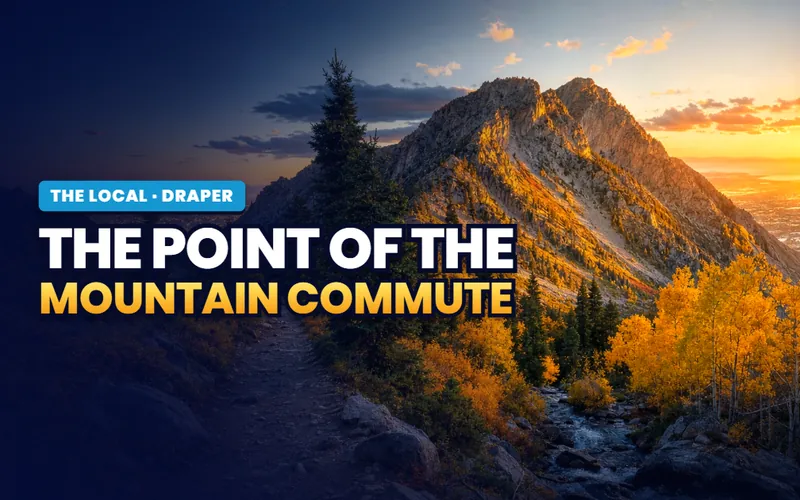 The commute over the PointI-15, TRAX and FrontRunner between Draper and Utah County.Read the guide
Talk to Scott
Ready for your next step in Draper?
My base is Southern Utah. So for a Draper move, I connect you with a partner agent I trust for the work on the ground. I stay on your file for the homework and the loan side. You get a partner agent who knows the area, plus me in your corner.
How it works in Draper
- A local agent on the ground.I connect you with a partner agent I trust near Draper for the showings, the offer, and the closing.
- A second set of eyes.I stay on your file and do the homework on any home you are weighing, from the commute to the school boundaries.
- Real estate and lending, one person.I am licensed in both real estate and lending. On any one purchase I take one role. If I am your lender, I can tell you early if a home could be hard to get a loan on.
- A reply within one business day.Call or text, and I get back to you within one business day.
Or call me: (435) 357-4345I reply within one business day.

Referral disclosure. Outside Southern Utah, I connect home sellers and buyers with partner agents I trust in their area. If you choose to work with an agent I refer, that agent's brokerage pays my brokerage (Real Broker, LLC) a referral fee. The fee comes out of the agent's compensation; it is not an added cost to you. You are always free to choose any agent you wish, and using a referred agent is never required.