
Central Utah Fillmore
The courthouse town and Utah's first statehouse
Fillmore, the courthouse town at Utah's midpoint
About 2,870 people at roughly 5,000 feet, sitting right on Interstate 15 near the middle of the state. Fillmore holds the Millard County offices and the Territorial Statehouse, the oldest government building in Utah, with the Pahvant Range at its back. Six pages on the town, the Statehouse, the historic walk, Chalk Creek and everyday life.
 By Scott Buehler, Moving Utah
Updated October 2026
By Scott Buehler, Moving Utah
Updated October 2026
The short version
Fillmore is a small courthouse town that was once meant to be the capital of Utah. When the territory was young, the legislature picked this spot near the center of the map to be its seat of government and started a sandstone statehouse here, before the capital moved north to Salt Lake City and the plan fell away. What stayed is the building, the courthouse role, and a farming and freeway town at the foot of the Pahvant Range. This hub is the map to six deeper pages, and it hands the bigger central Utah subjects to the region pages that every town on the corridor shares.
How the town sits
Mountains to the east, desert to the west, and the interstate down the middle
Fillmore reads east to west in a simple tilt. To the east the Pahvant Range rises green and forested, and Chalk Creek Canyon cuts straight back into it above town. To the west the ground opens into the Sevier Desert, dry and wide, running toward far ranges. Between the two the town sits on a bench of watered farmland, and Interstate 15 runs right through it, north toward the Wasatch Front and south past Cove Fort. That freeway line is why most travelers ever see Fillmore, and it is also why a town this small carries more than its size would suggest.
With the county government here, Fillmore holds the courthouse, the county offices and a community hospital, so it works as the service town for a long stretch of rural country. Its historic core is built around the Territorial Statehouse, which anchors both the town's story and its walking route. Why the town became the first capital and the historic district walk cover that side, and Chalk Creek and the Pahvant Range covers the canyon at its back.
This hub stays at the level of the map and hands the detail to the six pages below. The market side of a move, what homes cost, the streets buyers ask about and the local schools, lives on the Fillmore city guide.
Range to the east, desert to the west, and the freeway straight down the middle. That is the whole shape of Fillmore.
The wider corridor
Fillmore is one stop on a long central spine
The bigger draws near Fillmore reach well past the town, so they sit at the region level and are told once for every place on the corridor. A few of the closest are below. This hub names them and links out, and keeps its own six pages close to town.

South past Cove Fort
Fremont Indian State Park
Fremont rock art and a museum in Clear Creek Canyon, an easy run down the freeway.
Read
West across the desert
Delta and the West Desert
The neighboring Millard County town, its trilobite beds and the Great Basin beyond.
Read
The front door
All of central Utah
The region hub, with every town and shared subject along the central spine.
ReadAll of these sit under the central Utah region hub. For the day to day of the neighboring county town, the Delta city guide has the practical side.
The Fillmore companion
Six pages on the town itself, from the Statehouse to the canyon
Everything The Local has written about Fillmore itself: the ranked things to do, why it became the first capital, the walk through the historic district, Chalk Creek and the range behind town, the everyday services, and what to weigh before a move. Each is its own page, and this is the map to all of them.

Things to do
Top 10 things to do
The Statehouse, Chalk Creek, Meadow Hot Springs and Cove Fort, ranked with costs and drive times.
Read
Why it mattered
Utah's first capital
How the young territory chose Fillmore in 1851, and why the capital did not stay.
Read
On foot
The historic district walk
A self guided route through the Statehouse grounds, Main Street and the pioneer era core.
Read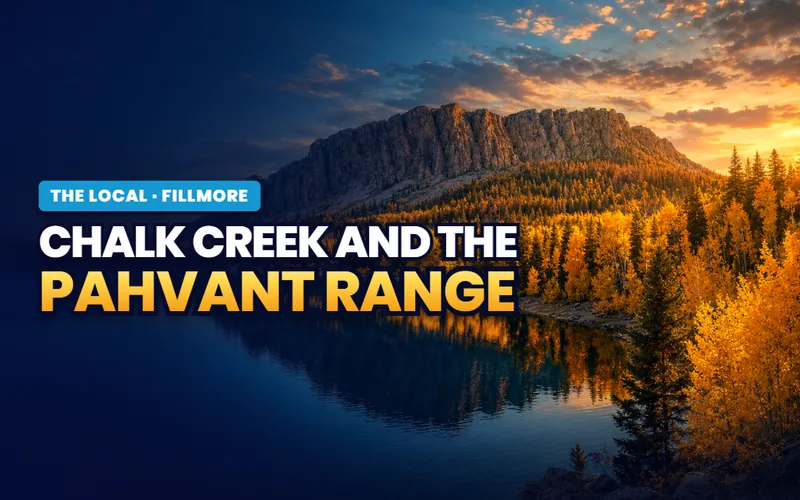
Up the canyon
Chalk Creek and the Pahvant Range
The canyon east of town, a trout stream, aspen in fall and the route to the Paiute Trail.
Read
Day to day
Groceries, services and daily life
The grocery on Main, a community hospital, the county offices and the freeway services.
Read
Weighing a move
What to know before moving
Water questions, drive times, schools and the trade offs of a small courthouse town on I-15.
ReadWeighing a move instead of a stop?
The Fillmore city guide covers the housing market, the streets buyers ask about, and the local schools.
Scott Buehler
Moving Utah About Scott
Quick answers
Fillmore, answered
Being Utah's first territorial capital. The Territorial Statehouse, begun in the 1850s and the oldest existing government building in the state, still stands at the center of town. Today Fillmore is where the Millard County offices are, a small farming and highway town on Interstate 15 with the Pahvant Range at its back. The companion pages here cover the Statehouse, the historic walk, the canyon and everyday life.
It sits right on Interstate 15 in south central Utah, at roughly the midpoint of the state, so nearly everyone arrives by freeway. The town is at about 5,000 feet where the Pahvant Range meets the desert floor. For the routed drive times to the bigger cities, see the moving to Fillmore page.
The 2020 census counted 2,592 people. That is small by size, but because the county runs from here the town carries the courthouse, the county offices and a set of services a place its size would not otherwise have.
No. The territorial legislature named it the capital in 1851 and met once in the new Statehouse, but the seat of government returned to Salt Lake City in 1858. The story of why the choice was made, and why it did not last, is on the first capital page.
The Territorial Statehouse and its grounds, a walkable historic Main Street, and Chalk Creek Canyon climbing into the Pahvant Range just east of town, plus Meadow Hot Springs and Cove Fort a short drive away. The ranked list on the top ten page puts them in order with costs and drive times.
It is the sandstone building the territory started in the 1850s to house Utah's government, and it is the oldest existing governmental building in the state. Only one full legislative session was ever held there. It is now a state historic site and museum, and the historic district walk is built around it.
The Pahvant Range rises green and forested to the east, with Chalk Creek Canyon cutting back into it, while open desert runs west toward the Sevier Desert and the ranges beyond. The Chalk Creek and Pahvant Range page covers the canyon, the trout stream and the seasons up there.
It is a courthouse and highway town rather than a bedroom suburb, with a grocery on Main, a community hospital, county and school offices, and the traveler services that come with a freeway exit. The living in Fillmore page walks through the day to day, and the moving to Fillmore page covers what to weigh before a purchase.
It is a hub and six guides. This page is the overview: the ranked things to do, why the town became the first capital, the historic district walk, Chalk Creek and the Pahvant Range, everyday services, and what to know before moving. Bigger central Utah subjects such as Fremont Indian State Park are written once at the region level and linked from here.
A courthouse town on the freeway, worth thinking through
Fillmore raises its own questions: whether a small courthouse town on the interstate fits how you work, what an hour or two from the nearest city really means day to day, and how the water and the land sit around a given lot. Tell me what you are weighing and I will introduce you to a Millard County partner agent who knows this stretch of I-15, and stay on for the research and the financing side.
Or call Scott: (435) 357-4345or send Scott a message
Keep going
Continue your Fillmore research
Eight more doors into Fillmore, chosen for what this page covers.
Questions about Fillmore?
Call Scott, send a message, or find out what your Fillmore home is worth. No pressure, no obligation.
Referral Disclosure: For moves outside Southern Utah, I can connect you with trusted local agents. If you choose to work with one, their brokerage pays my brokerage (Real Broker, LLC) a referral fee from their commission. This costs you nothing extra, and you are never obligated to use my referral.