
Sevier County, Central Utah
Moving to Monroe, Utah
Monroe is a small town on the east side of the Sevier Valley, at the foot of the Sevier Plateau and Monroe Peak. City Hall sits at about 5,380 feet, and hot water comes out of the ground on the east side of town. Richfield is about 15 minutes north on SR-118. Want to see what is for sale right now? The Browse Monroe homes button below shows every listing.
Drive times from Monroe. Look up any Utah drive
Start here
What brings you to Monroe?

Pick one, and I will point you to the right page. It takes three taps at most, and there is nothing to sign up for.
Chapter 1 of 4
The place and the weather
What Monroe is, how the hot springs town grew, and what the high desert sky does all year.
City at a glance
What are the quick facts on Monroe?
The place
The weather
The money
Around town
Sources: U.S. Census Bureau, NOAA, USGS, the Utah State Tax Commission, and Monroe City. Prices move, so ask me for current numbers.
Overview
What is Monroe like?
Short answerA small town of about 2,740 people on the east side of the Sevier Valley, with hot springs, city power and Monroe Peak at its back. It is the second-largest town in Sevier County.
Monroe is a small town of about 2,740 people on the east side of the Sevier Valley. The 2020 Census counted 2,515, so the town has grown about 9 percent since. It is the second-largest town in Sevier County, after Richfield and ahead of Salina. The city covers about 3.6 square miles.
The town sits east of the Sevier River, at the foot of the Sevier Plateau. City Hall is at about 5,380 feet. Homes run from about 5,340 feet on the north and west edges to about 5,510 feet at Mystic Hot Springs on the east side. Monroe Canyon opens at the south end of town. Monroe Peak, at about 11,200 feet, stands about 7 miles south-southeast, nearly 6,000 feet above town. The county history page calls the place "a little green valley."
Monroe is on SR-118, not US-89. SR-118 is Main Street, and it runs north to Richfield, where the Sevier County offices are. Richfield is about 15 minutes away, and it has the hospital and the big stores. I-70 is at Elsinore, about 8 minutes northwest. US-89 passes west of town at Joseph.
The Utah History Encyclopedia says that in the summer of 1863 George Washington Bean led a small company to explore the Sevier River valley. They founded Fort Alma on the east side of the river. The Sevier County Archives say, "Monroe was first settled in 1864 by 32 families." The settlers found "a generous stream of water from the main canyon, cottonwood trees and willows."
The town was first called South Bend, then Alma. The South Bend Canal still carries the first name. The Black Hawk War drove the settlers out in the 1860s, and men reclaimed the fort by 1871. The town took the name Monroe, for President James Monroe, when its post office came in the early 1870s. Two long canals on the east side of the river, with Clear Creek and Monroe Creek, watered hay and wheat. The encyclopedia says, "By 1880 Monroe had grown to be the second largest community in Sevier County." The town shrank for decades after the 1920s and has mostly grown since.
The hot water is what sets Monroe apart. The U.S. Geological Survey (USGS) says Monroe Hot Springs is on the east edge of town. Red Hill Hot Spring is about 1 kilometer farther northeast. It calls them "parts of a single system" that flows out of travertine mounds at the foot of the plateau, near the Sevier Fault. Travertine is a rock the hot water leaves behind as it cools. The USGS measured the water at 162 to 167°F in 1976 and 1977. Today Mystic Hot Springs, which the resort says was once called Monroe Hot Springs, uses that water. Red Hill is under a mile northeast of Mystic, just outside the city line. The resort gives 168°F for the source water. The outdoors topic has the soaking details.
In the late 1970s the U.S. Department of Energy funded test wells to see if the hot water could heat the town. The town never got a heating system. It did get its own power. Two local men built a water-powered plant at the canyon grist mill from 1907. In 1915 the town bought out the two partners and began running the first city power system. The Cold Springs hydro plant started up in January 2013. The utilities topic has the power details.
In 2026 the city adopted the state's wildland urban interface code, a set of building rules for land near the forest. The new construction topic tells what it means for a new lot.
Highlights
- About 2,740 people in 2025, up about 9 percent from the 2020 Census count of 2,515.
- The second-largest town in Sevier County, after Richfield.
- City Hall at about 5,380 feet. Monroe Peak stands about 11,200 feet high, 7 miles away.
- Settled in 1864 by 32 families. Renamed Monroe in the early 1870s.
- Hot water rises on the east side of town, near the Sevier Fault.
- The city has run its own power since 1915.
- Richfield is about 15 minutes north on SR-118.
What sets Monroe apart
Hot springs
Two springs share one hot system on the east side of town.
City power
The city has run its own power system since 1915.
Schools in town
All three public schools are inside the city line.
The Paiute trail
The Paiute ATV Trail runs through the mountains above town.
Richfield nearby
The hospital and the big stores are about 15 minutes north.
The burn scar
The 2025 fire left a burn scar above town. The home checks topic covers it.
Sources: the Census, USGS, the Utah History Encyclopedia, the Sevier County Archives, a 1978 Department of Energy report, Mystic Hot Springs, and Monroe City.
Want the street level story? Monroe on The Local has a guide to the hot water under town. My relocating to Utah guide covers the wider move.
Still choosing a town?Utah City FinderSort 138 Utah towns by budget, snow, summer heat, and the drive to work.Find a townClimate and weather
What is the weather like in Monroe?
Short answerWarm dry summers, cold winters and cool nights. About 125 days pass between freezes, and about 7.8 inches of rain and melted snow fall in a year.
Monroe is a high desert town with four seasons. Summers are warm and dry, with cool nights. Winters are cold, with light snow. A normal year brings only about 7.8 inches of rain and melted snow. May is the wettest month.
Monroe has no long weather record of its own. The numbers below are NOAA 1991 to 2020 normals from the Richfield Radio station, about 9 miles north and about 95 feet lower than Monroe. It is the nearest long record, so treat the numbers as a close guide, not a Monroe reading.
Spring
Highs 58 to 73°F
Cool and dry, with cold nights well into May. The last freeze usually comes around May 21.
Summer
Highs 85 to 90°F
Warm, dry days and cool nights near 50. About 44 days a year reach 90, and 100 is rare.
Fall
Highs 53 to 81°F
Warm early, cold late. The first freeze usually comes around September 24.
Winter
Highs 41 to 47°F
Cold, with nights near 17 and light snow. December and January are the snowiest months.
Month by month
These are the normal highs and lows for each month, as measured at Richfield. Notice how far the air cools at night. Even in July, a normal night falls to about 54°F.
- JanuaryHigh 41°F, low 17°F
- FebruaryHigh 47°F, low 22°F
- MarchHigh 58°F, low 27°F
- AprilHigh 64°F, low 32°F
- MayHigh 73°F, low 39°F
- JuneHigh 85°F, low 47°F
- JulyHigh 90°F, low 54°F
- AugustHigh 88°F, low 52°F
- SeptemberHigh 81°F, low 43°F
- OctoberHigh 68°F, low 32°F
- NovemberHigh 53°F, low 23°F
- DecemberHigh 41°F, low 16°F
Source: NOAA climate normals, 1991 to 2020, Richfield Radio KSVC station (USC00427260), about 9 miles north of Monroe.
Frost and the growing season
The short growing season matters for a garden. The last spring freeze usually comes about May 21, and the first fall freeze about September 24. That leaves about 125 days in between. About 176 nights a year drop to freezing or lower. About 6 nights a year drop to 0°F or lower. The USDA hardiness zone for Monroe's ZIP code is 6a.
Plan a garden around those dates, and expect to cover tender plants in late spring. In fall, the hunting season on the mountain above starts while the town is still warm by day.
Summer storms and the burn scar
Summer thunderstorms matter more here since the 2025 fire. The Forest Service names the storm that can start a debris flow: "0.24 [inches] of rain in 15 minutes during a high intensity thunderstorm." It adds that this storm "has a 1-year recurrence interval in the burned area," which means it can happen in any year. The National Weather Service "has established an early warning alert plan for the Monroe Canyon area." The home checks topic tells what a buyer should check.
Highlights
- A normal January day: high 41°F, low 17°F.
- A normal July day: high 90°F, low 54°F.
- Last spring freeze usually about May 21. First fall freeze about September 24.
- About 125 days between freezes in a normal year.
- About 7.8 inches of rain and melted snow a year, with May the wettest month.
- A small storm over the burn scar can start a debris flow.
Snow, summer heat, wind and air have their own topics. The snow topic, the summer topic, the wind topic and the air topic have the details.
Snow
How much snow does Monroe get?
Short answerAbout 18 inches in a normal year, mostly from November through March. December and January are the snowiest months.
A normal year brings about 18 inches of snow. That is about a third of what Salt Lake City gets. Most of it falls from November through March. December is the snowiest month at about 4.7 inches, and January comes next at about 4.3.
Source: NOAA climate normals, 1991 to 2020, the weather station in each town (Monroe uses the Richfield Radio KSVC station, about 9 miles north).
Snow covers the ground about 23 days a year. The snow figures are measured at the Richfield Radio station, about 9 miles north, so a storm can bring Monroe more or less.
Snow closes the high road up the mountain in winter. Snowmobile riders use the high country when the snow allows. The outdoors topic has the road closures.
Highlights
- About 18 inches of snow in a normal year.
- December and January are the snowiest months.
- Snow covers the ground about 23 days a year.
- Salt Lake City gets about 52 inches in a normal year.
There is no ski area near Monroe. The skiing topic has the nearest ones and their drive times. For the bigger picture on snow and water in Utah, read my guide on Utah water and snowpack.
Snow is not your thing?Try the warm winter city finderSee the Utah towns where snow is rare or light, from St. George to Moab.Show warm winter townsSummer temperatures
How hot does Monroe get in summer?
Short answerJuly highs average about 90°F, with nights near 54°F. About 44 days a year reach 90°F or hotter.
Summers are warm, dry and bright. A normal July afternoon reaches about 90°F. That is about the same as Ephraim and a few degrees cooler than Salt Lake City or Delta. The nights bring relief. A July night usually falls to about 54°F, and an August night to about 52°F.
Source: NOAA climate normals, 1991 to 2020, the weather station in each town (Monroe uses the Richfield Radio KSVC station, about 9 miles north).
Hot days are common but not constant. At the Richfield Radio station, about 9 miles north, a normal year has about 44 days at 90°F or hotter. A day at 100°F or hotter is rare, about one a year. June highs average about 85°F, and August highs about 88°F.
Cool nights
July and August nights fall to the low 50s.
Dry air
The whole year brings only about 7.8 inches of rain and melted snow.
Shade counts
The sun is strong and the air is dry, so shade and watering matter on a lot.
Highlights
- A July high of 90°F and a July low of 54°F.
- A few degrees cooler than Salt Lake City or Delta in July.
- About 44 days a year reach 90°F or hotter.
- About 1 day a year reaches 100°F.
Ask about the cooling system on any home you tour, and how well the attic is insulated. The city also sets summer watering rules. The home checks topic has them.
Wind
Is Monroe windy?
Short answerNo local wind record is printed for Monroe, so I give no wind number. Canyon and plateau weather can change fast.
I cannot give you a wind number for Monroe, and I would rather say so than guess. The weather station behind Monroe's numbers is in Richfield, about 9 miles north. It records temperature, rain and snow, but no wind normal.
Here is what I can say. Canyon and plateau weather can change fast, so check the forecast before a drive up Monroe Canyon. Summer thunderstorm gusts are the ones to watch. In dry summer weather, fire danger can rise on windy days. The outdoors topic covers the recent fire.
Wind numbers
There is no long wind record for Monroe, so this page gives no number.
Canyon weather
Check the forecast and the canyon road report before you drive up the mountain.
On a tour
Look at roofing, fencing and window seals. Ask which way a patio faces.
Highlights
- There is no long wind record for Monroe.
- Canyon and plateau weather can change fast.
- Watch for summer thunderstorm gusts.
Straight talk. The honest answer is to visit on a breezy day and notice. Ask neighbors about the wind on the street you are considering.
Air quality and inversions
Does Monroe get inversions?
Short answerCold air can pool on the low ground on calm winter days. Sevier County is on no EPA problem air list.
An inversion is when cold air gets trapped near the ground under a lid of warmer air. Cold air can pool on the low ground in Monroe on calm winter days. No one has measured how many inversion days Monroe gets.
EPA keeps lists of counties that miss the federal standard for fine particles, ozone and other pollutants. Sevier County is not on the nonattainment or maintenance list for any pollutant. Wildfire smoke can drift in during summer. The home checks topic and the outdoors topic tell about the 2025 fire.
Yard burning needs a permit. The city's Burn Permit link goes to the state's open burning form. Ask the fire department about the dates when burning is allowed.
Highlights
- Sevier County is on no EPA problem air list.
- Cold air can pool on calm winter days.
- Wildfire smoke can drift in during summer.
- Yard burning needs a state permit.
- There is no measured count of inversion days.
Here is what I would do. Check the air on the state's air quality site the way you check the weather. If winter air matters to you, visit on a calm winter day before you buy. The wind topic tells why there is no wind number.
Sources: EPA Green Book and the Utah Division of Air Quality open burning page.
End of chapter 1 of 4
NextFeatured homesFeatured listings
Featured homes across Utah
Homes featured on MovingUtah right now, fed live from the MLS.
View all featured homes across Utah
Listing data is deemed reliable but not guaranteed and is subject to change. Where a listing is one in which Scott Buehler holds an ownership interest, that interest is disclosed on the listing.
Chapter 2 of 4
Homes and money
What it costs, what you can buy, where the homes are, and what to check.
Cost of living
Is Monroe affordable?
Short answerHousing is the big cost, and the glance box at the top shows the typical home value. Sales tax is 6.95%, and a primary home pays about 0.50% of its value a year in property tax.
Housing is the biggest cost in Monroe. The glance box at the top of this page shows the Census typical home value. That number is what owners say their homes are worth, averaged over five years. It is not a sale price. Monroe is a small market, so a single acreage sale can move the whole picture. In Monroe you price the home, not the town.
The catch is the rural one. The big stores, the hospital and most jobs are in Richfield, 15 minutes north. Plan trips, and keep a deeper pantry than a city dweller would.
Everyday costs are easy to list. Sales tax in town is 6.95%, and groceries are taxed at 3%. A primary home pays about 0.50% of its market value a year in property tax. The taxes topic has every rate. Richfield and Salina are at 7.05%, so shopping in Richfield costs a little more in tax.
The city runs your power, water and pressurized irrigation. The city's 2026 fee schedule lists the rates. Power has a monthly customer charge of $11.75 plus about 11.9 cents a kilowatt hour. Culinary water has a $22.05 monthly base plus usage. Pressurized irrigation has an $18.53 monthly base per meter. The city budget adds a 2.5% power increase each year. These are separate lines, so ask the city office what a home you like pays in a month.
Monroe has no city sewer. The city bill carries a $5.00 monthly sewer-savings charge, saved toward a future sewer. Every home uses a septic tank for now. Garbage is curbside pickup by White's Sanitation under the city's contract, plus a $7.00 monthly county landfill fee on the city bill.
Housing
About 85% of homes are single-family houses, and about 13% are mobile homes. Compare each home on its age, its lot and its side of town.
City bill
One city bill carries power, water, irrigation, garbage and the sewer-savings charge. Ask what applies to a home you like.
Close to the basics
A grocery and a dollar store are on North Main. The hospital and the big stores are in Richfield, about 15 minutes away.
Highlights
- Housing is the big cost, and the Census typical value sits in the glance box above.
- Sales tax in town is 6.95%, with groceries at 3%.
- A primary home pays about 0.50% of its value a year in property tax.
- The city bill carries power, water, irrigation, garbage and a $5 sewer-savings charge.
- The big stores and the hospital are 15 minutes north.
Get a side by side for your budget and I will run the real numbers for the places you are weighing.
Sources: U.S. Census Bureau, American Community Survey 2020 to 2024; Utah State Tax Commission sales tax rates for October 2026 and 2025 property tax rates; Monroe City 2026 fee schedule and budget. Rates change, so ask the city office for today's numbers.
For general information only. This is not tax or financial advice. Tax rates and home prices change. Consult a qualified professional for guidance specific to your situation.
Taxes
What taxes will I pay in Monroe?
Short answerSales tax is 6.95%. Utah has one flat income tax rate. A primary home is taxed on 55% of its value, and the yearly bill runs about 0.50% at 2025 rates. The city made no increase in 2026.
Three taxes matter most when you move here: sales tax, state income tax and property tax. Here is each one in plain terms. The sales tax rates are the ones in effect in October 2026.
| Tax | Rate | What to know |
|---|---|---|
| Sales tax in Monroe | 6.95% | Richfield and Salina are at 7.05%. The rest of Sevier County, outside the towns, is at 6.65%. |
| Parks tax | 0.1% due to start | Voters approved a 0.1% parks and recreation tax in November 2025, and the council enacted it in December 2025. The state's October 2026 table does not show it yet. |
| Groceries | 3% | Food you buy at the store is taxed at a lower rate. |
| Restaurant meals | 7.95% | Prepared food carries a higher rate. |
| Lodging | 13.52% | This is the tax on a room rented by the night, such as a hotel room. |
| State income tax | 4.45% | One flat rate for everyone, for 2026. |
| Property tax | About 0.50% | The 2025 tax rate in Monroe's tax area on a primary home, as a share of its market value. The county average is about 0.50%, a little below the Utah average of 0.52%. |
The primary home exemption
Utah gives a tax break to the home you live in. A primary home is taxed on 55% of its market value. Monroe's 2025 total levy is 0.009006, and the city's part is 0.001106. Taking 55% of that total gives about 0.50% of market value a year. Second homes and nightly rentals are taxed on the full value. Seasonal homes are only about 2% of Monroe's homes, so this is a year-round town. Ask the county for the form and the deadline.
2026: no city increase
Monroe is not on the state's 2026 Truth in Taxation list. That is the list of cities that must hold a public hearing to raise property tax revenue. The city held only its regular budget hearing on May 26, 2026. The city's last rate increase came in August 2018, which the budget calls "the first time in over 35 years." The 0.50% above uses 2025 rates.
Where to pay and how to register a car
Bills go through the Sevier County Treasurer at 250 North Main in Richfield. Sevier County has no emissions test. The first 90 days topic has the vehicle steps. A 2026 state fee applies to homes in the state's high-risk wildland area. The home checks topic has the map link.
Highlights
- 6.95% sales tax in Monroe, with groceries at 3%.
- A 0.1% parks tax is voter approved and due to start.
- 4.45% flat state income tax for 2026.
- A primary home is taxed on 55% of its value.
- A primary home pays about 0.50% a year at 2025 rates, the same as the county average.
- The city made no rate increase in 2026.
- Bills go through the county treasurer, not the city.
Sources: Utah State Tax Commission (sales tax rates in effect October 1, 2026; 2025 property tax report and tax area rates; 2026 Truth in Taxation list); Monroe City budget and council records; Sevier County. Questions about your own bill go to the county.
For general information only. This is not tax or financial advice. Tax rates and home prices change. Consult a qualified professional for guidance specific to your situation.
Real estate overview
What do homes cost in Monroe?
Short answerThe glance box at the top shows the Census typical home value. About 85% of homes are single-family houses, and about five in six are owned by the people in them.
The glance box at the top of this page shows the Census typical home value. Monroe is a small market, so a few sales can move the numbers. Watch a whole year of sales, not one month. Recent sales of similar homes tell you more than any town number. Ask me for current numbers.
The Census counts about 1,100 homes in Monroe. About five in six are owned by the people in them, and the rest are rented. That is a higher share than in Richfield or Salina. Seasonal homes are about 2%, so nearly every home here is lived in all year. The town has grown about 9 percent since 2020.
Most homes are houses on their own lot. About 85% are single-family houses, and about 13% are mobile homes. One small apartment building is in town. The median home was built in 1982, and homes are larger than in Richfield or Salina, at a median of 7.2 rooms.
The age of the homes tells the town's story. About one in five went up in 1939 or earlier, which is the pioneer grid. Almost none went up from 1940 to 1969, the decades the town shrank. The 1970s brought about one in five, and about four in ten date from 1990 or later. These are Census estimates for a small town, so read them as shares, not exact counts.
The county parcel record shows the lots. Among about 2,200 home parcels inside the city line, the median is about half an acre. About 300 are an acre or more, and about 45 are five acres or more. The newer subdivisions mostly run half-acre lots. Some older plats on the east side run smaller, about a quarter to a third of an acre.
I found no zone names or lot minimums to print, because the city code is not posted in a form I could read. City staff say no zone is purely commercial. Ask the city office what is zoned next door to any home you like.
Historic homes on the old grid
Pioneer-era and early-1900s houses on in-town lots, with big trees. Age brings wear, so inspect the structure, the systems and the septic, not just the charm.
Ramblers, newer homes and manufactured homes
Ramblers from the 1970s on, newer homes and some manufactured homes. Check the home type, the land under it and how it finances.
Acreage and horse property
Bigger parcels sit on the west and south edges of town. Wells, septic, fencing and irrigation shares set the value. Shares do not always come with the land, so check what does.
Septic, shares and the burn scar
These quietly decide a deal here. Check the septic, which shares come with the home, and the drainage near the canyon. The home checks topic has the list.
Highlights
- The Census typical value sits in the glance box above. Ask me for current numbers.
- The city has about 1,100 homes. About five in six are owned by the people in them.
- About 85% are single-family houses, and about 13% are mobile homes.
- The median home was built in 1982, and about one in five went up in 1939 or earlier.
- The median home lot is about half an acre.
The jobs behind the market are covered in the economy topic. You can browse every Monroe home for sale any time. No account is needed to look.
Sources: U.S. Census Bureau, 2020 Census, 2025 population estimates and American Community Survey 2020 to 2024 (housing counts are estimates with a margin of error); Sevier County assessor parcel record, October 2025. Ask the city about any specific lot.
Neighborhoods and communities
Where in Monroe should I look for a home?
Short answerHomes sit on the old downtown grid, in named subdivisions on the west, east, south and southwest sides, and on county land outside the city line.
Monroe is an old grid town. Most of the town is the original Monroe City Survey, laid out block by block. Named subdivisions fill the west, east, south and southwest. Here are five areas, from the middle of town outward, and then the edges. Homes sit from about 5,340 feet on the west side to about 5,510 feet near the hot springs.
- CenterThe original grid around Main Street and Center StreetThe Monroe City Survey; about 5,350 to 5,380 feetCity Hall, Monroe School, the library and GG's Marketplace are on or near North Main. The oldest homes in the record go back to 1867. Trees are big, and newer homes fill lots between the old ones.
- WestThe west side, toward the river fieldsWhite Fence Farms, Luxury Estates, South Fork, Halls Lane and nearby plats; about 5,340 to 5,370 feetSouth Sevier High is here. Homes are mostly from 2000 on, on half-acre lots. The parcels west of the survey run to a few acres.
- EastThe east side, by the hot springsMonroe Hot Springs Estates, Monroe Heights and nearby plats; about 5,430 to 5,510 feetSouth Sevier Middle and Mystic Hot Springs are here, and the land rises toward the plateau. Homes date from the 1970s on, with smaller lots in the older plats. Visitors to the hot springs drive 100 North.
- SouthSouth, toward Monroe CanyonCrandall, Parsons Corner, Canyon Estates and nearby platsLots run from about half an acre to two acres. Monroe Canyon Road leaves the south end of town. The community fishing pond sits by the canyon road. Monrovian Park is up the canyon in the national forest, not in town.
- SouthwestThe southwestGreen Valley View, Monroe Highland Ranch, Hi-Roe Farms and Moon Valley; about 5,400 to 5,450 feetMonroe Highland Ranch has the newest homes in the record, from 2022 to 2024.
Highlights
- The original grid has the oldest homes and the big trees.
- The west side has newer homes on half-acre lots, with a few larger parcels at its edge.
- The east side has the hot springs, the middle school and homes from the 1970s on.
- The south has half-acre to two-acre lots on the canyon road side.
- Monroe Highland Ranch has the newest homes in the record.
Some homes sit just outside the city line, on county land. Poverty Flat is to the south, and Brooklyn Acres is west toward the river. Small plats sit to the north. Acreage parcels sit all around town. Wells, septic, water rights and Rocky Mountain Power may apply on these lots. The home checks topic and the utilities topic have the questions to ask.
Flood zones touch three areas, the south, west and east edges. The home checks topic has the map link.
Elsinore, Joseph, Central Valley and Annabella are towns of their own, 8 to 13 minutes away. The nearby topic has their drive times. Tell me what you are looking for, and I will pass it to the partner agent on the ground. That agent checks the water, the septic and the setting for the parcel. You can also browse every Monroe home for sale.
Area names come from the Sevier County assessor's parcel record of October 2025 and the FEMA flood map. Elevations come from USGS. Drive times are by car from City Hall at 10 North Main.
New construction
Are there new homes in Monroe?
Short answerAbout 200 homes went up inside the city line since 2021, mostly single lots and small plats. No builder is confirmed active, so ask who builds on any lot.
New building in Monroe is modest. The county record shows about 200 homes built inside the city line since 2021. Most are single homes on lots across the old grid, plus small plats. No large builder of many homes shows in the record, and no builder is confirmed active in 2026, so I name none.
Where the building is
Luxury Estates on the west side has about 20 homes built since 2021. Monroe Highland Ranch on the southwest side has homes from 2022 to 2024. Hi-Roe Farms has homes from 2024, and the second phase of Monroe Hot Springs Estates was built in 2024. A new home here is usually a lot in a small plat between older homes, or a custom home on acreage.
Fees and rules for a new lot
The city's 2026 fee schedule lists the fees. Culinary water has a $2,000 connection fee for a 3/4-inch line, plus a $5,327 water impact fee. Irrigation has a $1,015 connection fee plus a $2,645 irrigation impact fee. A power connection is $1,350 in a developed underground subdivision, and more for overhead lines. An impact fee is a one-time charge that helps pay for the system a new home will use.
Two city rules changed in 2026. The city adopted the Utah Wildland Urban Interface code in June. Some lots near the mountain carry fire-resistant building rules, so ask the city which lots are on its map. The city also amended its subdivision ordinance in June.
Water and septic
Monroe has no city sewer, so a new lot needs a septic permit from the local health department. The city's 2023 water plan found storage below state minimums and a few places inside the city where fire flow is not met. Fire flow is the water a hydrant can deliver to fight a fire. In 2026 the city is drilling a new well with USDA and state emergency money. Ask the city about water service and fire flow for a lot at the edge of town.
Questions for every new lot
- City water or a well. Get a city connection in writing, or confirm a well and the water right behind it.
- Septic. Ask if septic will work on the lot, what it will cost, and who approves it.
- Irrigation shares. Inside town, the city runs pressurized irrigation. On farm ground, shares come separately. Get them named in the contract.
- The flood map and the drainage. Check the FEMA map and the drainage after the 2025 fire.
- The fault and the fire map. Look at the Sevier fault on the east side and the city's wildland urban interface map.
Buying new works differently from buying resale. You pick a lot, follow a build schedule, and sign the builder's contract. Builders often cover the buyer agent fee, and your agent puts that in writing before you sign.
Highlights
- About 200 homes were built inside the city line since 2021, mostly on single lots and small plats.
- Monroe Highland Ranch has homes from 2022 to 2024.
- The 2026 fee schedule lists a $5,327 water impact fee and a $2,645 irrigation impact fee.
- The wildland urban interface code came in June 2026.
- No builder is confirmed active, so ask who builds on any lot.
Sources: Sevier County assessor parcel record (October 2025); Monroe City 2026 fee schedule, agendas and 2023 culinary water master plan. Plans change, so ask the city where each one stands.
Before you buy
What should I check before I buy a home here?
Short answerCheck the burn scar and the drainage, the flood map, radon, the septic tank, the water and the wildfire edge. Test any private well.
Every town has its own list of things to check. Monroe has several. They are the questions I would ask about any home here. A few have free maps you can look up for one address. This is homework, not a verdict.
Check the drainage
The burn scar
The Monroe Canyon Fire started July 13, 2025, on the Fishlake National Forest about 3 miles east of town. It burned 73,721 acres and was Utah's largest wildfire of the 2025 season. It destroyed four homes and forced about 60 to evacuate. The Forest Service summarized the USGS model. After a storm with "a 1-year recurrence interval," it found "a likelihood of 80-100% for a debris flow" in Dry Canyon and the Monroe Canyon tributaries. A debris flow is a fast flow of mud and rock. It happened: on July 28, 2026, flooding and debris flows closed Monroe Canyon Road, and "mud and boulders covered the road," KUTV reported. Check the Fishlake National Forest alerts before you go. The Forest Service found that aerial seeding was not an effective treatment. It expects ground cover "approaching pre-fire conditions within 3-5 years." Near the canyon drainages, check the burn scar maps, the flood maps and your insurance.
Check the map
Flood maps
City Hall is in FEMA Zone X, which means minimal flood hazard. Two Zone A strips touch town. Zone A means a 1% chance of flooding in any year. One strip runs from the mouth of Monroe Canyon around the south and west sides of town toward the river fields. A small one sits on the east side by the hot springs. Check the map at msc.fema.gov for any lot on the south, west or east edge. Ask your lender whether flood insurance is required. The town sits on the fan of land that Monroe Creek built.
Ask about the ground
The fault
The Sevier fault runs along the east side of town, and the hot springs sit near it. The 1921 Elsinore earthquakes, magnitude 6.0, damaged valley towns. The state says Utah law does not require realtors to verify or disclose geologic hazards, so ask. This is geology, not a reason for alarm.
Test the home
Radon
Radon is a gas from the ground that you cannot see or smell. In Monroe's ZIP code, 76% of 71 home tests ran at or above the EPA action level of 4 pCi/L, and the average was 22.1. That is the highest in Sevier County, where about half of tests ran high. These are 2019 numbers. Test every home.
Inspect and test
Septic and wells
The whole town is on septic, because there is no city sewer. State geologists found nitrate near or above the drinking-water limit under and northwest of town, most likely from septic tanks. Test any private well. The best groundwater is near the mouth of Monroe Canyon. City tap water is not the shallow aquifer: it comes from Cold Springs up the canyon plus a well. Inspect the tank and drain field on every purchase. Wells reach water at about 40 to 200 feet, and near the river the water table can sit within about 15 feet.
Ask the city
City water after the fire
The city budget says its main water source, Cold Springs, "was heavily affected by the Monroe Canyon Fire of July 2025." The city relies on one well for most of its water. A second well is being drilled. Summer watering rules bar watering between 10 a.m. and 6 p.m. This is a city supply fact, not a home defect.
Get it in writing
Water rights
The Sevier River Basin has been closed to new surface water rights since 1946 and to new groundwater rights since 1997. A well or irrigation on a rural lot needs an existing right. Get the shares named in the contract. The city's pressurized irrigation serves lots inside the area it plans to serve, and farm ground runs on the Monroe and South Bend canals.
Check the edge
Wildfire edge, soils and old homes
The forest boundary reaches the city's southeast corner, and the city adopted the state wildland urban interface code in 2026. Check the state map at wildfirerisk.utah.gov and ask about insurance. A state wildfire fee began in 2026 for homes in the high-risk wildland area. The state has no hazard mapping for soils in the Sevier Valley, and no map is not no hazard. About one in five homes went up in 1939 or earlier, so check the structure, the foundation, the wiring and the plumbing. The yard has about 125 frost-free days. The weather topic has the numbers.
Also worth a look
- The burn scar: the 2025 fire destroyed four homes, and debris flows closed Monroe Canyon Road in July 2026.
- Flood: two Zone A strips touch the south, west and east edges of town.
- Radon: 76% of 71 tests in Monroe's ZIP code ran high, so test every home.
- Septic: every home uses it, and state geologists found nitrate under and northwest of town.
- Water: new water rights are closed in the basin, so a rural lot needs an existing right.
Call 811 before you dig. Ask what serves any lot: a well, a water right, a septic system and a road. Ask me about any of these on a home you like, and I will tell you what the record shows.
This is general information, not legal, engineering, or insurance advice. Sources: Fishlake National Forest burned area summary (August 2025); InciWeb; KUTV (July 28, 2026); FEMA National Flood Hazard Layer; Utah Geological Survey; Utah DEQ radon results (2019); Utah Division of Water Rights; Monroe City budget. Have a licensed inspector look at any home before you buy.
Financing your move
How do I pay for a home here?
Short answerGet pre-approved first. Older homes, septic parcels and acreage each finance in their own way, and the appraisal matters more in a small market.
The best thing you can do before you shop for a home is get pre-approved. That means a lender checks your finances and tells you how much you can borrow. It shows you what you can spend, and it makes your offer stronger when the right home comes up. In a small market like Monroe, being ready the day the right home appears matters.
Not every home here finances the same way. A lender reviews each of these in its own way. Examples are a historic farmhouse, a parcel on a well and septic, or acreage where irrigation shares carry real value. With few recent sales nearby, the appraisal matters more. An appraisal is the lender's check on what the home is worth. If I am your lender, I can tell you early if a home could be hard to get a loan on.
USDA has a map of eligible areas. The map does not rule out Monroe. The program's other rules decide the rest, so check the exact address on the map and ask a lender. The loan guides on this site explain conventional, FHA, VA and USDA loans in plain English.
Highlights
- Get pre-approved first. It shows what you can spend and makes your offer stronger.
- On USDA's map, Monroe is not ruled out. Ask a lender about any address.
- An older home, a parcel on septic and acreage each finance differently.
- The appraisal matters more in a small market.
How my dual role works. I am licensed in both real estate and lending. On any one purchase I take one role. Every role is disclosed, and you are always free to choose your own agent and your own lender. In Monroe, a partner agent I trust does the work on the ground. The full explanation is on How I Work. This section is general information, not financial, legal, or tax advice.
End of chapter 2 of 4
NextSelling in MonroeSelling in Monroe
Want to sell your home in Monroe?
List it with a partner agent I trust in Central Utah. Your home gets featured on MovingUtah. Buyers read these pages while they plan a move to Monroe. I make the connection and stay involved. Commissions are always negotiable.
Start with what your home is worth. There is no cost, and you do not have to list.
Call or text (435) 357-4345. I reply within one business day.
Selling outside Southern Utah. In Iron, Washington, Kane, Garfield, and Beaver counties I am your listing agent. Elsewhere in Utah, I connect you with a partner agent I trust in that area. If you choose to work with an agent I refer, that agent's brokerage pays my brokerage (Real Broker, LLC) a referral fee out of their compensation, never an added cost to you. You are always free to choose any agent you wish, and using a referred agent is never required.
Chapter 3 of 4
Daily life
Work, doctors, schools, a college campus, getting around, and getting set up.
Employment centers
Where do people work in Monroe?
Short answerMost Monroe jobs are small and local, and the biggest employers are in Richfield. The biggest group of workers drives 15 to 19 minutes.
Monroe's own jobs are small and local. The city, the schools, a care home, a hot-springs resort and Main Street shops are the larger employers in town. The big employers are in Richfield, 15 minutes north. The traffic topic has the commute numbers.
The state groups employers by size, not by rank. Its file from September 2026 lists about 80 employer records at Monroe addresses. The largest record in town is the school district's kindergarten to grade 5 school, Monroe School. Monroe Canyon Assisted Living, South Sevier High and South Sevier Middle are in the next size group. Monroe City, Mystic Hot Springs, GG's Marketplace and Alvey Lumber follow. This is a list of size groups, not a ranking.
The city is an employer too. It runs the power system, culinary water, irrigation, the parks, the library and the cemetery. Its power comes from three hydro plants plus power it buys.
Where people work
The Census shows about three in four Monroe workers driving alone, and about 11 percent working from home. No one in the survey took transit. About nine in ten work inside Sevier County. A Census job count for 2023 shows about 385 Monroe residents working in Richfield. That is the biggest single group of workers coming into Richfield.
Jobs across the county
Sevier County had about 10,000 jobs in 2025. Trade, transportation and utilities were the biggest group. Trucking and mining are big for a county this size, at about 720 and 680 jobs. The Deseret News called the SUFCO coal mine, up Salina Canyon, the county's largest private employer in 2025. In Richfield, Walmart and Sevier Valley Hospital are in the state's top size group, and The Home Depot is in the next.
Internet varies by address, so read the internet topic before you plan on remote work.
Highlights
- About 80 employer records sit at Monroe addresses, grouped by size.
- Monroe School is the largest record in town, and the two South Sevier schools and a care home are in the next group.
- Monroe City runs power, water, irrigation, parks, the library and the cemetery.
- About three in four workers drive alone, and about nine in ten work inside Sevier County.
- Sevier County had about 10,000 jobs in 2025.
Moving here for a job? My job relocation guide covers the sale and search timeline.
Sources: the state employer file (September 14, 2026), Census ACS (2020 to 2024) and job counts for 2023, BLS county jobs for 2025, the Deseret News (2025) and the Monroe City site. Size groups are not a ranking, and no head counts are shown.
Healthcare
Is there a hospital in Monroe?
Short answerNo. Sevier Valley Hospital in Richfield is about 17 minutes north. Intermountain and Revere Health each run a family clinic on Main Street.
No. Monroe has no hospital. Sevier Valley Hospital is at 1000 North Main in Richfield, about 11 miles and 17 minutes north. It is part of Intermountain Health. Its emergency department is open around the clock, and the phone is 435-893-4100. The state's 2025 trauma list shows it as a Level IV trauma center. Trauma levels run from I, the most complete, to V.
Two family clinics are in town. Intermountain Health runs the South Sevier Clinic at 238 North Main. Revere Health runs Monroe Family Medicine at 568 South Main. Call either one to ask what it offers and when it is open. The state's September 2026 employer file also lists Aspen Ridge Pharmacy at 515 North Main and Monroe Canyon Assisted Living at 535 South Main.
Sevier County EMS runs the ambulances and keeps one of its four stations in Monroe. The others are in Richfield, Salina and Koosharem. For an emergency, call 911.
When you need more
Utah Valley Hospital in Provo is a Level II trauma center, about 2 hours 10 minutes away. Level II centers handle more serious cases than Level IV. Serious injuries and rare conditions can mean that drive.
Highlights
- No hospital in town. Sevier Valley Hospital is about 17 minutes north.
- Its emergency department is open 24 hours.
- Two family clinics are in town: Intermountain's South Sevier Clinic and Revere Health's Monroe Family Medicine.
- Sevier County EMS keeps one of its four ambulance stations in Monroe.
- The nearest Level II center is in Provo, about 2 hours 10 minutes.
The catch. If someone in your home sees a specialist often, plan for the drive. Learn the way to the emergency department before you need it.
On military orders? My military PCS guide covers VA loans and timing the move.
Sources: the Intermountain Health and Revere Health sites, the state trauma list (2025), the Sevier County EMS page, the state employer file and map drive estimates, checked in October 2026. Clinic services and hours change, so call first.
Schools and education
What schools serve Monroe?
Short answerThe Sevier School District. Monroe School, South Sevier Middle and South Sevier High are all in town. I do not rate schools.
Monroe is in the Sevier School District, which had about 4,270 students in the fall 2025 count. All three public schools that serve the town are inside it, and together they cover kindergarten through grade 12. The district offices are in Richfield.
Grades K to 5
Monroe School
Kindergarten to grade 5, with 482 students, at 40 West Center. Many people still call it Monroe Elementary.
Grades 6 to 8
South Sevier Middle
Grades 6 to 8, with 295 students, at 300 East Center.
Grades 9 to 12
South Sevier High
Grades 9 to 12, with 379 students, at 430 West 100 South.
The middle and high schools carry the South Sevier name because they serve the south end of the county. The district also runs a preschool in Monroe. Ask the district which school serves an address you are serious about, since boundaries and grade splits can change.
I do not rate schools, and I would be wary of anyone who says which one is best. The links below go to the district and to independent sites.
What to know
- The Sevier School District had about 4,270 students in fall 2025.
- Monroe School has 482 students in kindergarten to grade 5.
- South Sevier Middle has 295 students, and South Sevier High has 379.
- All three schools are in Monroe.
- The district runs a preschool in Monroe.
Counts come from the Utah State Board of Education (October 1, 2025). Ratings and boundaries come from independent third parties and the district, not from me.
Higher education
Is Monroe a college town?
Short answerNo, but Snow College has a campus in Richfield, about 16 minutes north. It teaches nursing, welding, diesel and other trades.
No, but a college campus is close. Snow College Richfield is at 800 West 200 South, about 16 minutes north. It is the branch of Snow College, a public college whose main campus is in Ephraim. Ephraim is about 1 hour 15 minutes away, and the Ephraim page covers it.
The Richfield campus teaches hands-on fields. Its page lists nursing (RN, LPN and nursing assistant), welding, diesel heavy equipment, automotive, machine tool, composites and heating and air. It also lists the commercial driver license (CDL) and emergency medical technician (EMT) training. Other programs are cosmetology and barbering, medical assistant, business, computer information systems, agriculture, natural resources and general education. The campus has student housing, and the Sevier Valley Center sits on it.
For a four-year degree, the larger universities are a long drive. Southern Utah University in Cedar City is about 1 hour 35 minutes away, and Provo is about 2 hours 5 minutes. Weigh that distance against online classes.
Highlights
- Snow College Richfield is about 16 minutes north.
- Programs include nursing, welding, diesel, automotive, CDL and EMT training.
- The campus has student housing.
- The main campus in Ephraim is about 1 hour 15 minutes away.
- Cedar City and Provo are the nearest four-year universities.
Sources: the Snow College Richfield campus page and map drive estimates from City Hall. Programs change, so check the campus page.
Traffic and commute
How bad is traffic in Monroe?
Short answerThe one state road, SR-118, is Main Street. The biggest group of workers drives 15 to 19 minutes to Richfield, and about three in four get to work in under 20.
Monroe has one state road, SR-118, and it is Main Street. Most trips inside town take a few minutes. School crossing guards work at Main and Center and at 100 South and 100 West.
How long people drive to work
The Census shows the biggest group, about 31 percent of workers who travel, driving 15 to 19 minutes. That is the Richfield run. About three in four reach work in under 20 minutes. A small group, about 9 percent, drives 45 minutes or more. These are survey estimates with wide margins, so treat them as a guide. The jobs topic says where the work is.
The roads
SR-118 comes in from the west, from I-70 and US-89 at Joseph. It enters Monroe as 100 South and turns north on Main Street. It then runs north past Elsinore and Central Valley into Richfield. The Richfield run is SR-118 the whole way, about 15 minutes. Monroe is not on US-89, which passes to the west at Joseph.
I-70 is at Elsinore, exit 31, about 8 minutes from City Hall. UDOT lists no 2026 project on SR-118 or in Monroe. The city budget shows a state grant to resurface Main Street from 100 South to 600 South, set for 2028. In 2026 the city also adopted a Transportation Master Plan.
Highlights
- SR-118 is Main Street, and the Richfield run is SR-118 the whole way.
- The biggest group of workers drives 15 to 19 minutes, the Richfield run.
- About three in four workers reach work in under 20 minutes.
- I-70 exit 31 at Elsinore is about 8 minutes away.
- UDOT lists no 2026 project on SR-118 or in Monroe.
Before you go. Winter storms can slow I-70 and the roads out of the valley. Check the road map before a move day. Monroe Canyon Road is a forest road, so check the Fishlake alerts for it.
Sources: the Census ACS (2020 to 2024), the Monroe City budget and notices, AARoads and the UDOT Central Utah project page, checked in October 2026. Commute counts carry wide margins.
Public transportation
Does Monroe have public transportation?
Short answerNo. Sevier County has no local public transit, so plan on a car.
No. Sevier County has no local public transit, and the Census records no transit riders among Monroe workers. Plan on a car for daily life.
There is no intercity bus stop in Monroe either. The nearest Greyhound and FlixBus stop is in Richfield, at 1050 West 1250 South. No tickets are sold at the stop. Check the carriers for routes and days before you plan a trip around it.
If someone in your home will not drive, ask about the trips you need before you move.
Highlights
- No local public transit runs in Sevier County.
- The nearest Greyhound and FlixBus stop is in Richfield, with no ticket sales there.
- Plan on at least one car per working adult.
Sources: Sevier County and Greyhound pages and the Census ACS, checked in October 2026.
Airports
Does Monroe have an airport?
Short answerRichfield Municipal Airport is about 11 minutes north, with no airline flights. Cedar City is about 1 hour 40 minutes away, and Provo is about 2 hours 10 minutes.
Yes, a small one with no airline flights. Richfield Municipal Airport is about 11 minutes north of City Hall. The City of Richfield owns it. It is open to general aviation only, and no airline serves it.
Airline flights leave from farther away. Cedar City Regional has regular SkyWest flights, as Delta Connection, to Salt Lake City only. Provo has an airport, so check the airlines' current routes. Salt Lake City International is the full-service airport.
Airline airports
- Cedar City (CDC)~108 mi · ~1 hr 40 min
- Provo (PVU)~133 mi · ~2 hr 10 min
- Salt Lake City (SLC)~179 mi · ~2 hr 55 min
Highlights
- Richfield Municipal Airport is about 11 minutes north, with no airline service.
- Cedar City is about 1 hour 40 minutes away, with SkyWest flights to Salt Lake City only.
- Provo is about 2 hours 10 minutes away.
- Salt Lake City is the full-service airport, about 2 hours 55 minutes away.
Sources: the FAA record for Richfield Municipal Airport (AirNav), the Cedar City airport page and map drive estimates from City Hall. Winter storms add time.
Getting around
How far is Monroe from everything?
Short answerRichfield is about 15 minutes and Salina about 33. Provo is about 2 hours 5 minutes, and Salt Lake City is about 2 hours 45 minutes.
Monroe sits on the east side of the Sevier Valley, under the Sevier Plateau. Richfield is north on SR-118. Salina is farther north, and Beaver is south. I-70 is at Elsinore, northwest of town.
- Richfield
- ~10 mi · ~15 min
- Salina
- ~33 mi · ~33 min
- Beaver
- ~54 mi · ~53 min
- Cedar City
- ~106 mi · ~1 hr 35 min
- Provo
- ~132 mi · ~2 hr 5 min
- Salt Lake City
- ~175 mi · ~2 hr 45 min
From City Hall
- Mystic Hot Springs~4 min
- Elsinore and I-70 (exit 31)~8 min
- Sevier Valley Hospital, Richfield~17 min
- Fremont Indian State Park~18 min
- Marysvale~29 min
- Fish Lake~1 hr 10 min
Here are the longer drives people ask about.
| Place | Time |
|---|---|
| Glenwood | About 24 minutes |
| Gunnison | About 49 minutes |
| Ephraim, the main Snow College campus | About 1 hour 15 minutes |
| Panguitch | About 1 hour 20 minutes |
| St. George | About 2 hours 20 minutes |
Every time here starts at City Hall, at 10 North Main. The nearby topic has the towns and day trips in more detail.
Highlights
- Richfield is about 15 minutes north, and Salina about 33.
- Cedar City is about 1 hour 35 minutes, and Provo about 2 hours 5 minutes.
- Salt Lake City is about 2 hours 45 minutes away.
- Fish Lake is about 1 hour 10 minutes away.
Planning a trip to a town not on this list? Look up any Utah drive between 138 towns.
These are map estimates from City Hall in normal conditions, not official figures. Add time for snow, and check your own route.
Utilities and getting set up
Who do I call to set up utilities?
Short answerMonroe City for power, water and irrigation, and Enbridge Gas Utah for gas. There is no city sewer. Call the city office first.
The city handles power, water and irrigation, and other companies handle the rest. City Hall is at 10 North Main, phone 435-527-4621. The office is open Monday to Thursday from 9 a.m. to 5 p.m. and Friday from 9 a.m. to 1 p.m. Call ahead. Here is who to call.
| Service | Who provides it | How to start |
|---|---|---|
| Electric power | Monroe City Power inside town; Rocky Mountain Power just outside | City office, 435-527-4621; Rocky Mountain Power, 888-221-7070 |
| Water and irrigation | Monroe City | City office, 435-527-4621; pay the bill online through the city's bill-pay link |
| Sewer | None; every home is on septic | The city bill carries a $5 monthly sewer-savings charge |
| Garbage | White's Sanitation, under the city's contract | Ask the city office how to start pickup |
| Natural gas | Enbridge Gas Utah | 800-323-5517 |
| Landfill | Sevier County Landfill, near Sigurd | Monday to Friday 8 to 5, Saturday 8 to 1 |
| Internet | CentraCom, InfoWest and others | See the internet topic |
Two providers
Power and gas
Monroe runs its own power, and it has since 1915. The overview tells the story. Enbridge Gas Utah, once called Dominion, serves the town. Some outlying acreage runs on propane, so ask at the address.
Septic only
Sewer and septic
Monroe has no city sewer. Every home is on a septic tank, and the home checks topic tells what to inspect.
2026 rates
Rates
The cost of living topic has the city's 2026 power, water and irrigation rates. Ask the city office for garbage details.
Text alerts
Alerts and 811
Text MONROEUTILITIES to 91896 for utility notices. Call 811 before you dig.
Inside the city's irrigation boundary, the city runs pressurized irrigation. The city shuts the water off each fall, in mid-October. A lot outside town may run on a well and septic instead, and the county landfill takes waste only from inside Sevier County.
Highlights
- Monroe City provides power inside town, plus water and irrigation.
- Rocky Mountain Power serves some places just outside town, and Enbridge sells the gas.
- There is no city sewer, only septic tanks.
- The city office is open Monday to Thursday 9 to 5 and Friday 9 to 1.
- Text MONROEUTILITIES to 91896 for utility alerts.
Sources: Monroe City pages, budget and newsletter, the state electric service map, the county landfill page, and the Rocky Mountain Power and Enbridge numbers, checked in October 2026. Rates and schedules change.
Internet and cell
What internet can I get in Monroe?
Short answerCentraCom reports fiber and cable at the center of town, and InfoWest reports fiber too. Service differs by address, so check the exact one.
It depends on the address. The state broadband map lists what providers report at points in Monroe. It does not prove that a given house can order a plan.
Fiber is a glass cable that carries internet very fast. CentraCom reports fiber and cable at the center of town, and InfoWest reports fiber too. Check the exact address on the state map before you count on any of them. This page gives no speeds or prices, since both change.
Cell service from AT&T, T-Mobile and Verizon is on the county's state map list.
Highlights
- CentraCom reports fiber and cable at the center of town.
- InfoWest reports fiber too.
- Service differs by address, so check the exact one.
- AT&T, T-Mobile and Verizon are on the state's cell list.
Source: the Utah Broadband Center provider layer, checked in October 2026. The map shows what providers report, not what every home can order.
After you move
What do I need to do after I move to Monroe?
Short answerStart the utilities, register your car within 60 days, and get a Utah driver license. Sevier County has no emissions test.
Moving day is only the start. Here is the short list for your first 90 days in Monroe.
- Turn on the utilitiesCall the City Office at 435-527-4621 for power, water and irrigation. Call Enbridge Gas Utah at 800-323-5517. Ask the city how to start garbage pickup. Do this a week before you move in.
- Register your carUtah gives you 60 days after you move. The Richfield DMV is at 250 North Main and is open Monday to Friday from 8 a.m. to 5 p.m. A car titled in Utah for the first time needs a vehicle identification number (VIN) inspection.
- Get your Utah driver licenseThe Driver License Division office is at 1160 South Highway 118 in Richfield, open Monday to Friday. It is the full-week office for central Utah.
- Skip the emissions testSevier County does not require one.
- Ask about the primary home tax rateThe county assessor can tell you how to claim it. The taxes topic has the rule.
- Sign up for alertsText MONROEUTILITIES to 91896 for utility notices. The county's emergency notices run on Everbridge.
- Get a library cardThe Monroe City Library is at 55 North Main, phone 435-527-4019. It is open Tuesday to Saturday from 1 to 6 p.m. Libby and Overdrive give you e-books.
- Register to voteRegister online at vote.utah.gov, or in person with ID.
- Sign up for schoolAsk the Sevier School District which school serves your address.
- Test for radonTest every home. The home checks topic has the numbers.
Quick facts
- 60 days to register a car after you move.
- No emissions test in Sevier County.
- The DMV and the driver license office are both in Richfield.
- Monroe has no city police. The Sevier County Sheriff serves the town under a contract.
- Monroe City Fire Department is staffed by local firefighters.
- The city council meets the 2nd and 4th Tuesday at 7 p.m.
Burning yard waste needs a state burn permit. The air topic has the form.
ToolBuild your Utah relocation planA week by week timeline and checklist, dated from your move day.Build my planRules and office hours change. Check each office before you go.
Groceries and shopping
Where do people shop in Monroe?
Short answerGG's Marketplace and Family Dollar are in town. Walmart and The Home Depot are in Richfield, and the nearest Costco is about 2 hours away.
Monroe has a small grocery and a few basics on Main Street, all within about two minutes of City Hall. GG's Marketplace is at 515 North Main. It is the town grocery, and the state lists it as a grocery store for food assistance. Family Dollar is at 120 North Main and is open daily from 8 a.m. to 10 p.m. It sells propane and some refrigerated food. For named places to eat, see the restaurants topic.
Green Valley Gas, at 280 North Main, is the town's gas station. The post office is at 485 North Main. Monroe has no hardware, farm or feed store, so those trips go to Richfield. Keep a deeper pantry and plan your runs.
The Richfield run
Richfield has the big stores, about 13 to 17 minutes north on SR-118. Plan one trip there for what Monroe does not carry. Larsen's Ace Hardware is also on SR-118 in Richfield. Lin's Fresh Market has a pharmacy.
| Store | Where | From City Hall |
|---|---|---|
| Family Dollar | Monroe | About 1 minute |
| GG's Marketplace | Monroe | About 2 minutes |
| Walmart Supercenter | Richfield | About 13 minutes |
| Tractor Supply | Richfield | About 13 minutes |
| The Home Depot | Richfield | About 14 minutes |
| Lin's Fresh Market | Richfield | About 15 minutes |
| IFA Country Store, part of the Utah farm co-op chain | Richfield | About 17 minutes |
What Monroe does not have
Costco is not in Monroe or anywhere in the Sevier Valley. The nearest ones are in Spanish Fork, about 2 hours away, and St. George, about 2 hours 15 minutes away. The pick follows the trip. For other big stores, the Cedar City run, about 1 hour 35 minutes, is shorter than the Provo run, about 2 hours 5 minutes.
Highlights
- GG's Marketplace is the town grocery, about 2 minutes from City Hall.
- Family Dollar is open daily from 8 a.m. to 10 p.m.
- Monroe has no hardware or farm store. Those trips go to Richfield.
- The big-store run is Richfield, about 13 to 17 minutes.
- The nearest Costco is in Spanish Fork, about 2 hours.
Store lists and hours change. These were checked against store pages, state and map records in October 2026. A business missing here is not necessarily closed.
End of chapter 3 of 4
NextBrowse Monroe homesHomes for sale
Browse all Monroe homes for sale
Live MLS listings with the same data agents use. No account needed to look.
Chapter 4 of 4
Weekends
Hot springs on the east side, a long ATV trail, the Fishlake forest and Capitol Reef within about an hour and 45 minutes.
Outdoor recreation
What is there to do outside?
Short answerTwo hot springs, the Paiute ATV Trail, Monroe Peak, a fishery and Fish Lake are close. Check the Fishlake alerts for Monroe Canyon Road.
Monroe sits at the foot of Monroe Peak, the high point above town. Hot water comes out of the ground on the east side. A long ATV trail, a mountain with a world-record elk, two public pools of hot water and a big lake are all close. Snow closes the high road in winter.
~4 min
Mystic Hot Springs
At 475 East 100 North. Soaking is by reservation only, in 2-hour time slots. The resort says its pools usually run between 99 and 110 degrees Fahrenheit. It also rents converted vintage buses, cabins, campsites and RV sites. The resort says the Cooper family homesteaded it in 1886. The overview tells how the hot water got here.
A few minutes
Red Hill Hot Springs
The county travel office calls these "the public Red Hill Hot Springs." They sit under a mile northeast of Mystic, just outside the city line. The pools are small and open to the air.
Above town
Monroe Peak and Monroe Mountain
The peak is the high point above town. Forest Service roads FS 078, the Monroe Mountain main road, and FS 165 to Monroe Peak are on the Richfield Ranger District's ride list. Snow closes the high road in winter. Listed Richfield district roads close January 1 to May 15.
Across five counties
Paiute ATV Trail
The Bureau of Land Management (BLM) says the trail is 275 miles long, with over 1000 miles of marked side trails. It runs across five counties: Sevier, Millard, Piute, Beaver and Garfield.
Canyon View Park
Paragliding
Pilots fly from the hills around town. The pilots' club lists the Monroe Training Hill. In 2025 the city finished Canyon View Park, a landing zone for paragliders and hang gliders. A fall fly-in usually runs in late September.
~8 min
Monroe Community Fishery
At 1317 Monroe Canyon Road, on the state's community fishery list. The city calls it Monroe's irrigation pond. The Sevier River also runs through the valley.
~1 hr 10 min
Fish Lake
The Forest Service calls it the largest natural mountain lake in Utah. It sits above 8,800 feet. Ice fishing usually runs from about New Year through March. OHVs are not allowed in the Fish Lake basin.
~1 hr 5 min
Pando
A grove of quaking aspen near Fish Lake. The Forest Service says it weighs nearly 13 million pounds and covers over 106 acres.
Riding the Paiute and the forest
The county travel office says riders can ride directly from town into miles of high mountain trails. Confirm the street routes with the city before you plan on riding in town. OHVs include ATVs and side-by-sides.
Every OHV operator in Utah has to finish the free Utah OHV Education Course. As of September 8, 2026, out-of-state OHVs also need a permit, even when registered as street legal in another state, with limited exceptions. The Fishlake National Forest covers about 1.76 million acres and counts about 2,700 miles of trails and roads open to motor vehicles.
Hunting and fishing
Boone and Crockett certified a 2008 bull from Monroe Mountain as the world record non-typical American elk. Its score was 478 5/8 points.
Fire and flood on the mountain
Flooding and debris flows closed Monroe Canyon Road on July 28, 2026. No reopening was posted when this page was checked. Check the Fishlake National Forest alerts before you go. Monrovian Park, up the canyon, is closed each year from July 1 to September 30 when flash floods are possible. That order runs through 2030. The home checks topic tells the story of the 2025 Monroe Canyon Fire.
Highlights
- Mystic Hot Springs is about 4 minutes from City Hall, and soaking is by reservation only.
- Red Hill is under a mile northeast of Mystic, just outside the city line.
- The Paiute ATV Trail is 275 miles long and crosses five counties.
- As of September 8, 2026, out-of-state OHVs need a permit, even if street legal at home.
- Monroe Canyon Road was closed by flooding on July 28, 2026, so check the alerts.
- Fish Lake is about 1 hour 10 minutes away, with Pando nearby.
Trail facts and rules come from the BLM, the Fishlake National Forest, the Utah state parks and wildlife sites, Mystic Hot Springs, the county travel office and Boone and Crockett. Drive times are map estimates from City Hall, with no traffic. Road and fire closures change, so check each agency before you go.
National parks access
How close are the national parks?
Short answerCapitol Reef is about 1 hr 45 min east, and Bryce Canyon is about 1 hr 50 min. Fremont Indian State Park is about 18 minutes west.
Capitol Reef National Park is the closest national park, about 83 miles and 1 hour 45 minutes east. Bryce Canyon is about 1 hour 50 minutes away, and Zion is about 2 hours 35 minutes. All three are open all year. Plan a full day or a night away for each.
| Place | Drive from City Hall |
|---|---|
| Capitol Reef National Park, visitor center | About 1 hr 45 min |
| Bryce Canyon National Park, visitor center | About 1 hr 50 min |
| Zion National Park | About 2 hr 35 min |
| Fremont Indian State Park | About 18 min |
| Big Rock Candy Mountain | About 22 min |
| Marysvale | About 29 min |
| Piute State Park | About 40 min |
| Otter Creek State Park | About 1 hr 5 min |
Bryce Canyon and Zion charge a 2026 nonresident fee to visitors who are not U.S. residents. Capitol Reef does not. Check the National Park Service site for current fees and hours.
Fremont Indian State Park
Fremont Indian State Park is about 18 minutes west on I-70. It protects petroglyphs and the site of a Fremont village, and it is an International Dark Sky Park. The museum exhibits were closed for renovation in 2026, so check the park's site. Summer hours run March to September, and winter hours run October to March.
Big Rock Candy Mountain
Big Rock Candy Mountain is a landmark south on US-89, about 22 minutes away. Check the resort's site for what is open.
Highlights
- Capitol Reef is about 1 hr 45 min east, and Bryce Canyon about 1 hr 50 min.
- Zion is about 2 hr 35 min away.
- Fremont Indian State Park is about 18 minutes west, with petroglyphs.
- The park's museum exhibits were closed for renovation in 2026.
Drive times are map estimates from City Hall, with no traffic. Park details come from the National Park Service and the Utah state parks site.
Ski access
How close is skiing?
Short answerNo ski area is near. Brian Head is the nearest open area, about 1 hr 45 min away. Eagle Point will not open this winter.
No ski area sits near Monroe. Brian Head is the nearest open ski area, about 1 hour 45 minutes away. Sundance is about 2 hours 25 minutes away. Each resort posts its own opening day, so check its site.
Eagle Point, east of Beaver, will not open for the 2026-27 winter. The resort said so on August 3, 2026, after the Cottonwood Fire. It is not an option this winter.
Winter close to home needs no lift. The county travel office lists snowmobiling on Monroe Mountain when the snow allows. Ice fishing at Fish Lake usually starts around New Year and lasts through March.
Highlights
- Brian Head is the nearest open ski area, about 1 hour 45 minutes away.
- Sundance is about 2 hours 25 minutes away.
- Eagle Point will not open for the 2026-27 winter.
- Ice fishing at Fish Lake usually runs from around New Year through March.
Drive times are map estimates from City Hall, outside storms. Ski details come from each resort's site, and the county travel office lists the winter uses.
Golf
Is there golf in Monroe?
Short answerNot in town. Cove View in Richfield is about 16 minutes north, and Beaver and Sterling are about an hour away.
Not in town. Monroe has no golf course. The closest is in Richfield, and two more are about an hour away.
Cove View Golf Course is Richfield's city-owned 18 hole course, at 1315 West 1800 South, about 16 minutes north. Canyon Breeze in Beaver has 9 holes and is about 1 hour away. Palisade State Park Golf Course in Sterling has 18 holes and is about 1 hour 5 minutes away. Call ahead for tee times at any of them.
Highlights
- No golf course in Monroe.
- Cove View in Richfield is an 18 hole city course, about 16 minutes north.
- Canyon Breeze in Beaver has 9 holes, and Palisade has 18. Both are about an hour away.
Course details come from the course and state park sites, so call before you play. Drive times are map estimates from City Hall.
Restaurants
What are the restaurants like in Monroe?
Short answerA short list on Main Street: a burger drive-in, a chicken counter and a pizza counter, with a breakfast cafe in Elsinore.
Monroe has a short list of places to eat, all on Main Street. The next towns add a breakfast cafe and a burger stop. This is not a ranking, and no one paid to be here. Hours move around, so call or check before you go.
- BurgersBullies Drive-In46 N MainBurgers, fries and shakes, with a drive-through and a patio. Closed Sunday.
- Fried chickenKrispy Krunchy Chicken280 N Main, inside Green Valley GasA fried chicken counter in the town's gas station.
- PizzaGG's Pizzeria515 N Main, inside GG's MarketplacePizza at the town grocery.
- BreakfastCowboy Corral, Elsinore19 N Center, about 8 minutesA breakfast cafe, open mornings Tuesday to Saturday.
- BurgersFlying U Country Store, Joseph45 S State, about 9 minutesIt won a 2026 statewide cheeseburger title, as the Richfield Reaper reported.
The kinds of food are burgers, chicken, pizza and breakfast. Bullies and Cowboy Corral close on Sunday. Family Dollar and the chicken counter list Sunday hours. For groceries and stores, see the shopping topic.
A bigger choice
Richfield has the chains and more places to eat, 13 to 17 minutes north. The Richfield page lists them.
Highlights
- The list is not a ranking, and no one paid to be on it.
- Bullies Drive-In is on North Main and is closed on Sunday.
- Krispy Krunchy and GG's Pizzeria sit inside a gas station and a grocery.
- Cowboy Corral in Elsinore serves breakfast, about 8 minutes away.
- Richfield has the chains, 13 to 17 minutes north.
Names and addresses come from each business's own site, listing sites and the state's grocery list, checked in October 2026. Hours change, so almost none are shown.
Entertainment
What else is there to do in Monroe?
Short answerMystic Hot Springs and its concerts, the library, city parks and Magnify Monroe. Bigger outings go to Richfield.
Monroe's attractions are small and close together. Mystic Hot Springs is the headline, and a library, city parks and a Main Street group fill in. Bigger outings go to Richfield, 15 minutes north.
~4 min
Mystic Hot Springs and its concerts
Mystic calls its hillside "the Hill" and uses it as an acoustic concert venue. The resort says all shows start at 7:30 p.m. A 2026 summer show was on its calendar. The outdoor recreation topic has the soaking rules.
Tuesday to Saturday
Monroe City Library
At 55 North Main. It is open Tuesday to Saturday from 1 to 6 p.m., and the phone is 435-527-4019. It lends e-books through Libby and Overdrive.
Four parks
City parks
Mountain View Park has tennis courts, soccer fields, a splash pad and a playground, about 2 minutes from City Hall. Lion's Park is the Pioneer Days site. Monroe View Red Hill Park and Canyon View Park, the paragliding landing zone, are also on the city's list.
Main Street
Magnify Monroe
The town's historical society committee. It works on Main Street art, music and history. The city calls it a Utah Main Street organization.
The Richfield outing
Richfield has the Sevier Valley Center at Snow College Richfield, about 17 minutes away. Its arena seats 4,144 and its theater seats 816. Richfield also has restaurants and the big September ATV Jamboree. The Jamboree runs in the events topic.
Highlights
- Mystic holds acoustic concerts on the Hill, and all shows start at 7:30 p.m.
- The Monroe City Library is open Tuesday to Saturday, 1 to 6 p.m.
- Mountain View Park has tennis courts, soccer fields and a splash pad.
- The Sevier Valley Center in Richfield is about 17 minutes away.
Outdoor trips are in outdoor recreation, and the day trips are in national parks.
Details come from the Monroe City site, the resort's own site and the Snow College specifications. Hours change, so check before you go.
Arts and culture
What is the arts scene like?
Short answerThin in town. Mystic holds acoustic concerts, and the Sevier Valley Center in Richfield is about 17 minutes away.
Monroe's arts scene is thin. The town has a library, a Main Street group and a hillside concert venue, and the big stages are in Richfield and Gunnison. Here are the places by distance, nearest first.
- MusicMystic Hot Springs475 E 100 N, MonroeAcoustic concerts on the Hill. All shows start at 7:30 p.m.
- LibraryMonroe City Library55 N Main, MonroeBooks, e-books and a STEM Spot out front.
- Main StreetMagnify MonroeMonroeMain Street art, music and history.
- VenueSevier Valley CenterSnow College RichfieldAn arena that seats 4,144 and a theater that seats 816. About 17 minutes away.
- TheaterCasino Star TheatreGunnisonA nonprofit theater with 260 seats. About 49 minutes away.
Highlights
- Mystic is the town's music venue, about 4 minutes from City Hall.
- The Sevier Valley Center in Richfield is about 17 minutes away.
- The Casino Star in Gunnison is about 49 minutes away.
Venue details come from each venue's own site and the Snow College specifications. Hours and seasons change, so check before you go.
Festivals and events
What festivals does Monroe have?
Short answerPioneer Days in late July is the town event. The valley adds a balloon festival, a county fair and an ATV jamboree.
The town's big weekend is Pioneer Days in July. The valley adds a balloon festival in June, a county fair in August and an ATV jamboree in September. Here is the usual run of the year. Dates move, so check the sponsor before you plan around one.
- JanuaryIce fishing starts at Fish Lake once the ice is thick enough. Listed Richfield district forest roads close until May 15.
- FebruaryA quiet month. People snowmobile up high when the snow allows.
- MarchFremont Indian State Park goes back to seven-day summer hours.
- AprilLower trails dry out as spring warms up.
- MayListed forest roads can open after May 15, as snow allows.
- JuneSalina's balloon festival, usually the third weekend.
- JulyPioneer Days in Monroe, usually around July 22 to 24. Richfield holds Independence Day events on July 3 and 4.
- AugustThe Sevier County Fair and rodeo in Richfield, usually the first full week. Mystic holds summer concerts.
- SeptemberA paragliding fly-in in Monroe, usually late in the month, and the Rocky Mountain ATV Jamboree in Richfield, usually mid-month.
- OctoberRichfield's Fall Festival, and the South Sevier High Halloween Carnival, usually late in the month.
- NovemberHigh forest roads close with snow.
- DecemberHoliday shows at the Sevier Valley Center in Richfield.
Pioneer Days
Pioneer Days is usually around July 22 to 24. In 2026 it began with 3-on-3 basketball on Main Street. The city held a children's parade and a barbecue on July 23. On July 24 came a parade, a free concert and fireworks at the middle school. Most years also have a Milk Run, a footrace.
The fall fly-in
A paragliding fly-in usually runs in late September. In 2026 it ran September 21 to 26, with daily flights as the weather allowed. It is for qualified pilots.
Highlights
- Pioneer Days is usually around July 22 to 24, with a parade, a free concert and fireworks.
- The paragliding fly-in usually runs in late September.
- The county fair and rodeo in Richfield usually fill the first full week of August.
- The ATV Jamboree in Richfield is usually in mid-September.
- The Halloween Carnival at South Sevier High is usually late in October.
Dates are the usual pattern, based on the city's July 2026 newsletter and each organizer. Check each sponsor for the exact days.
Nearby cities and day trips
What is near Monroe?
Short answerElsinore is about 8 minutes away and Richfield about 15. Provo is about 2 hr 5 min and Salt Lake City about 2 hr 45 min.
Monroe sits on the east side of the Sevier Valley, with small towns next door. Richfield, where the Sevier County offices are, is 15 minutes north. Here are the towns people use most, with the drive from City Hall.
| Town | Drive from City Hall | What is there |
|---|---|---|
| Elsinore | About 8 minutes | A valley town northwest, with I-70 exit 31. |
| Joseph | About 9 minutes | Where SR-118 meets US-89. |
| Central Valley | About 9 minutes | A small town north on SR-118. |
| Annabella | About 13 minutes | A small town north, past Central Valley. |
| Richfield | About 15 minutes | Where the Sevier County offices are, with the hospital, the big stores and Snow College Richfield. |
| Glenwood | About 24 minutes | A small town north of Richfield. |
| Marysvale | About 29 minutes | A town south on US-89. |
| Salina | About 33 minutes | A Sevier Valley town to the north. |
| Gunnison | About 49 minutes | Gunnison Valley Hospital and the Casino Star Theatre. |
| Beaver | About 53 minutes | A town south on I-15. |
| Ephraim | About 1 hr 15 min | The main Snow College campus. |
| Panguitch | About 1 hr 20 min | A Garfield County town south. |
| Cedar City | About 1 hr 35 min | Southern Utah University and a regional airport. |
| Provo | About 2 hr 5 min | A Level II trauma center and an airport. |
| St. George | About 2 hr 20 min | A large southern Utah city. |
| Salt Lake City | About 2 hr 45 min, 175 miles | The nearest major city. |
Day trips
Fremont Indian State Park is about 18 minutes west. Fish Lake is about 1 hour 10 minutes away. Capitol Reef is about 1 hour 45 minutes, and Bryce Canyon is about 1 hour 50 minutes. The national parks topic has the details.
Highlights
- Elsinore is about 8 minutes northwest, and Joseph about 9 west.
- Richfield is about 15 minutes north, and Salina about 33.
- Cedar City is about 1 hr 35 min, and Provo about 2 hr 5 min.
- Salt Lake City is about 2 hr 45 min away.
Drive times are map estimates from City Hall at 10 North Main, outside rush hour and storms.
End of chapter 4 of 4
NextWhat locals knowWhat locals know
The stuff only a local tells you
No brochure says this part. Here is the honest version of buying in Monroe, the way the homework reads it.
The fire changed the mountain
The 2025 Monroe Canyon Fire burned the forest above town. It destroyed four homes, and debris flows closed Monroe Canyon Road in July 2026. People watch summer storms closely now. It is a watch item, not a reason to walk, but it belongs in your homework near the canyon. The home checks topic has the details.
The town runs its own power
Monroe has run its own power since 1915. One city bill also carries water, irrigation, garbage and a $5 monthly sewer-savings charge. It is a small thing newcomers notice. The utilities topic has the numbers.
Everyone is on septic
There is no city sewer. Buyers here ask about the age of the tank and the drain field. State geologists found nitrate near or above the drinking-water limit under and northwest of town, most likely from septic tanks. Inspect the system, and test any private well. Radon is the bigger test, so test every home. The home checks topic has more.
Hot-springs visitors use 100 North
Visitors to Mystic Hot Springs drive 100 North from Main Street. If you buy on the east side, drive the street on a weekend before you choose. The neighborhoods topic has the areas.
ATVs are part of daily life
Monroe is a Paiute Trail town, and the Rocky Mountain ATV Jamboree brings riders to the valley in mid-September. The Jamboree is held in Richfield. I did not find a Monroe street ordinance for OHVs, so confirm the routes with the city. The outdoors topic has the trail rules.
The elk record came from this mountain
A bull from Monroe Mountain was certified the world record non-typical American elk in 2008, by Boone and Crockett. It will not change your commute, but it shows what kind of mountain sits behind town. The outdoors topic covers hunting and fishing.
Monroe is on SR-118, not US-89
SR-118 is Main Street, and it runs north to Richfield. US-89 passes west of town at Joseph. If a map or a listing says Monroe is on US-89, it is not. The getting around topic has the drive times.
FAQ
More questions people ask about Monroe
Monroe is known for its hot springs, the Paiute ATV Trail and the mountain above town. Hot water comes out of the ground on the east side of town, and the water at the source is close to 170°F. Monroe Peak stands about 11,200 feet high. A bull from Monroe Mountain was certified the world record non-typical American elk in 2008, by Boone and Crockett. Paragliders fly from the Monroe Training Hill and land at Canyon View Park. About 2,740 people live in town at about 5,380 feet. The overview tells how the town began.
Yes, two of them, less than a mile apart on the east side. Mystic Hot Springs is at the east edge of town. Red Hill Hot Springs is under a mile northeast of Mystic, just outside the city line. Soaking at Mystic is by reservation only, in 2-hour time slots. The resort says its pools are usually between 99 and 110°F. The resort says the Cooper family homesteaded the springs in 1886. The outdoors topic has the details.
The fire burned 73,721 acres on the national forest about 3 miles east of town. It was Utah's largest wildfire of the 2025 season. It destroyed four homes and forced about 60 to evacuate. The Forest Service summary of the USGS model found a likelihood of 80-100% for a debris flow in Dry Canyon and the Monroe Canyon tributaries. On July 28, 2026, flooding and debris flows closed Monroe Canyon Road. For a buyer near the canyon drainages, this is homework, not a verdict. The home checks topic has what to check.
The Census puts the typical owner-estimated home value at about $318,300 (ACS 2020 to 2024). It is a five-year average, so treat it as a baseline, not a sale price. A few acreage or view homes can pull any average up. Judge each home against recent sales of similar homes nearby. The housing market topic has more.
Richfield is about 10 miles north, about 15 minutes on SR-118, which is Main Street in Monroe. Richfield is where the Sevier County offices are, and it has the hospital, the big stores and Snow College Richfield. I-70 is at Elsinore, about 8 minutes northwest. The getting around topic has the other drive times.
I did not find a Monroe street ordinance for OHVs, so confirm the routes with the city before you count on riding from your driveway. The Paiute ATV Trail is "275 miles long and over 1000 miles of marked side trails" across five counties, the BLM says. Every OHV operator in Utah must complete the free Utah OHV Education Course. As of September 8, 2026, out-of-state OHVs also need a permit, with limited exceptions. The outdoors topic has the trail rules.
Yes. Monroe School serves kindergarten to 5th grade, with 482 students in October 2025. South Sevier Middle serves grades 6 to 8, with 295. South Sevier High serves grades 9 to 12, with 379. All three are in the Sevier School District. Ask the district which school serves a specific address. The schools topic has the links.
No. Monroe has no city sewer, and every home uses a septic tank. The city bill carries a $5 monthly sewer-savings charge, saved toward a future sewer. Monroe City runs the power, the water and the pressurized irrigation. White's Sanitation picks up garbage under the city's contract. The utilities topic has the numbers.
Yes. In Monroe's ZIP code, 76% of 71 home tests ran at or above the EPA action level of 4 pCi/L, and the average was 22.1. That is the highest in Sevier County, where about half of tests ran high. These are 2019 numbers. Test every home. The home checks topic has more on what to check.
GG's Marketplace at 515 North Main is the town grocery. Family Dollar at 120 North Main sells some food and household goods. The big stores are in Richfield, and the Walmart Supercenter there is about 13 minutes away. The shopping topic has the list.
Yes, in places. On the 2012 FEMA map, City Hall is in Zone X, which means minimal flood hazard. Two Zone A strips touch the south, west and east edges of town. Zone A means a 1% chance of flooding in any year. Check the map for any lot on those edges, and ask your lender whether flood insurance is required. The home checks topic has the map link.
For more answers about living in Utah, see the Utah FAQ.
Tools for your move
Plan your move in five simple steps
Each step is a tool on this site. There is no cost, and there is nothing to sign up for.
- 1
Ask the big question
Take the Should I Move to Utah quiz. It gives an honest answer, even when it is no.
Take the quiz - 2
Pick your town
The Utah City Finder sorts 138 towns by budget, snow, summer heat, and the drive to work.
Open the city finder - 3
Know your budget
The affordability calculator shows the price range your income and debts support. Estimates only.
Run the numbers - 4
Build your plan
The relocation plan builds a week by week timeline and checklist from your move day.
Build my plan - 5
Tour the homes
See every Monroe home for sale, fed live from the MLS. No account needed to look.
Browse Monroe homes
Monroe on The Local
Six guides to life here
A ranked list, the hot springs, the hot water under town, Monroe Peak and the canyons, and daily life.
 The top 8 things to doFrom a soak at the hot springs to the drive up the mountain.Read the guide
 A geothermal townHow hot water came to rise on the east side of town.Read the guide
 Mystic Hot SpringsThe soaking tubs, the travertine and the old buses you can sleep in.Read the guide
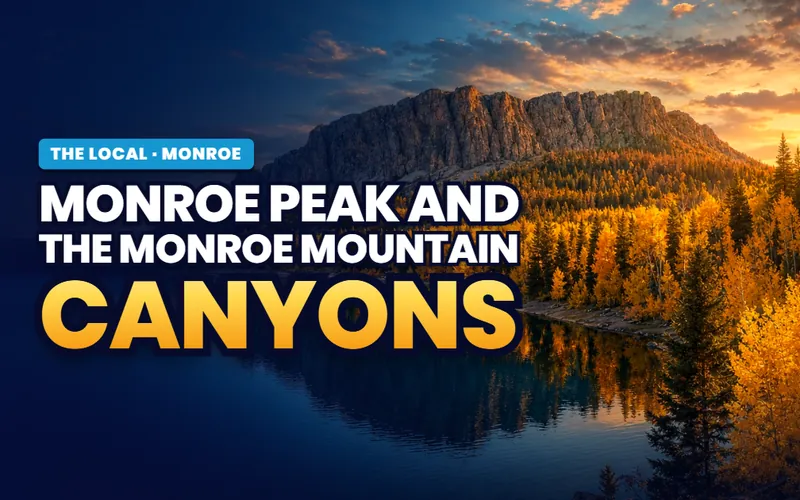 Monroe Peak and the canyonsThe peak above town and the canyon after the 2025 fire.Read the guide
 Living in MonroeThe grocery, the schools and the everyday errands in town.Read the guide
 Moving to MonroeThe water, septic and school questions to ask.Read the guide
Talk to Scott
Ready for your next step in Monroe?
My base is Southern Utah. So for a Monroe move, I connect you with a partner agent I trust for the work on the ground. I stay on your file for the homework and the loan side. You get a partner agent who knows the area, plus me in your corner.
How it works in Monroe
- A local agent on the ground.I connect you with a partner agent I trust near Monroe for the showings, the offer, and the closing.
- A second set of eyes.I stay on your file and do the homework on any home you are weighing, from the commute to the school boundaries.
- Real estate and lending, one person.I am licensed in both real estate and lending. On any one purchase I take one role. If I am your lender, I can tell you early if a home could be hard to get a loan on.
- A reply within one business day.Call or text, and I get back to you within one business day.
Or call me: (435) 357-4345I reply within one business day.

Referral disclosure. Outside Southern Utah, I connect home sellers and buyers with partner agents I trust in their area. If you choose to work with an agent I refer, that agent's brokerage pays my brokerage (Real Broker, LLC) a referral fee. The fee comes out of the agent's compensation; it is not an added cost to you. You are always free to choose any agent you wish, and using a referred agent is never required.